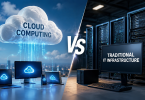

Cloud computing is fundamentally reshaping how businesses operate globally by replacing traditional on-premise IT systems with scalable, flexible, and cost-efficient digital infrastructure. Companies now store data, run applications, and manage operations through cloud platforms, enabling faster decision-making, remote collaboration, and real-time access to information. This shift is driving innovation, efficiency, and global competitiveness across industries.
Business Infrastructure Transformation
Shift from Physical Servers
Businesses are moving away from expensive physical servers toward cloud-based infrastructure that reduces hardware costs and maintenance needs. This transition allows organizations to scale resources instantly based on demand. It also improves reliability, reduces downtime, and enables smoother global operations without heavy infrastructure investments.
Scalable IT Resources
Cloud computing provides scalable IT resources that allow businesses to increase or decrease computing power as needed. This flexibility helps companies manage traffic spikes, seasonal demand, and growth efficiently. It ensures optimal performance while avoiding unnecessary costs associated with unused infrastructure capacity.
Reduced IT Maintenance Costs
With cloud services, companies no longer need to maintain large in-house IT teams for server upkeep. Cloud providers handle updates, security patches, and system maintenance. This reduces operational costs significantly and allows businesses to focus more on core activities and innovation.
Global Infrastructure Access
Cloud platforms offer global access to infrastructure, enabling businesses to operate in multiple regions without setting up physical offices or data centers. This supports international expansion, improves service delivery speed, and ensures consistent performance for users across different geographical locations.
Faster System Deployment
Cloud computing enables rapid deployment of applications and services compared to traditional IT systems. Businesses can launch new products, test software, and scale operations quickly. This speed improves competitiveness and allows companies to respond faster to market changes and customer demands.
Operational Efficiency Improvements
Real-Time Data Access
Cloud systems provide real-time access to data from anywhere, improving decision-making speed and accuracy. Employees and managers can analyze up-to-date information instantly. This enhances productivity and helps businesses respond quickly to operational challenges and market opportunities.
Automated Business Processes
Automation in cloud computing reduces manual work by streamlining repetitive tasks such as data entry, reporting, and workflow management. This improves efficiency, reduces errors, and allows employees to focus on strategic tasks that add more value to the organization.
Improved Workflow Collaboration
Cloud-based collaboration tools allow teams to work together seamlessly across different locations. Documents, projects, and communication channels are accessible in real time. This improves coordination, accelerates project completion, and enhances productivity in remote and hybrid work environments.
Resource Optimization
Cloud computing helps businesses optimize resources by allocating computing power only when needed. This prevents waste and ensures efficient usage of IT infrastructure. Companies can manage workloads better and reduce operational inefficiencies across departments and global operations.
Business Continuity Support
Cloud systems provide backup and disaster recovery solutions that ensure business continuity during system failures or crises. Data is securely stored and easily recoverable, reducing downtime and financial losses while maintaining smooth operations under unexpected conditions.
Financial Impact on Businesses
Pay-As-You-Go Model
The pay-as-you-go pricing model allows businesses to pay only for the cloud resources they use. This eliminates large upfront investments in hardware and infrastructure. It improves financial flexibility and helps businesses manage budgets more effectively while scaling operations.
Reduced Capital Investment
Cloud computing reduces the need for heavy capital investment in physical IT infrastructure. Companies can allocate funds toward innovation, marketing, and expansion instead of expensive servers. This supports faster growth and improves overall financial efficiency.
Lower Operational Expenses
Operational expenses decrease significantly because cloud providers handle maintenance, upgrades, and security. Businesses save on staffing, energy, and hardware costs. These savings improve profitability and allow reinvestment into core business development activities.
Cost Predictability
Cloud services offer predictable billing structures that help businesses plan budgets more accurately. Transparent pricing models reduce unexpected costs and improve financial planning. This stability is especially beneficial for startups and growing enterprises managing limited resources.
Improved ROI
By reducing infrastructure costs and improving efficiency, cloud computing delivers higher return on investment. Businesses achieve better productivity, faster operations, and reduced expenses, leading to stronger financial performance and long-term sustainability.
Global Business Expansion
International Market Reach
Cloud computing enables businesses to reach global markets without establishing physical offices in every region. Digital platforms allow seamless service delivery across countries, expanding customer base and increasing revenue opportunities worldwide.
Cross Border Collaboration
Teams from different countries can collaborate efficiently using cloud-based tools. This improves communication, accelerates project completion, and supports international partnerships. It also enhances innovation through diverse global teamwork.
Multi Region Operations
Businesses can operate in multiple regions simultaneously using cloud infrastructure. This ensures consistent service quality and faster response times for customers worldwide. It supports global scalability and operational consistency.
Global Customer Support
Cloud systems enable 24/7 customer support through digital platforms, chat systems, and AI tools. Businesses can serve customers across different time zones efficiently, improving satisfaction and brand reputation.
Market Entry Flexibility
Cloud computing reduces barriers to entering new markets by eliminating infrastructure requirements. Businesses can launch services quickly in new regions, test demand, and scale operations based on performance.
Security and Data Management
Advanced Data Encryption
Cloud platforms use advanced encryption techniques to protect sensitive business data. This ensures confidentiality and reduces the risk of unauthorized access or cyber threats across digital systems.
Centralized Data Storage
Centralized storage allows businesses to manage all data in one secure location. This improves accessibility, organization, and control while reducing data duplication and inconsistency across departments.
Cybersecurity Enhancements
Cloud providers implement strong cybersecurity measures including firewalls, intrusion detection, and continuous monitoring. This protects businesses from evolving cyber threats and ensures secure operations.
Compliance Management
Cloud services help businesses meet regulatory compliance standards by providing secure data handling and reporting tools. This is essential for industries like finance, healthcare, and e-commerce.
Data Backup Systems
Automated backup systems ensure that business data is regularly saved and recoverable in case of system failure. This reduces risk and ensures business continuity during unexpected disruptions.
Innovation and Technology Growth
AI Integration in Cloud
Artificial intelligence integrated with cloud computing enhances automation, analytics, and decision-making. Businesses can analyze large datasets efficiently and gain valuable insights for strategic growth.
Machine Learning Platforms
Cloud-based machine learning platforms allow companies to develop and deploy intelligent applications. These systems improve predictions, customer behavior analysis, and operational efficiency across industries.
Big Data Analytics
Cloud computing supports big data processing, enabling businesses to analyze large volumes of information. This helps in identifying trends, improving strategies, and enhancing decision-making processes.
IoT Cloud Connectivity
Cloud platforms connect IoT devices, enabling real-time data exchange and monitoring. This improves automation in industries such as manufacturing, healthcare, and logistics.
Continuous Software Updates
Cloud systems allow automatic software updates without downtime. This ensures businesses always use the latest features, security patches, and performance improvements.
Future of Cloud-Driven Business
Hybrid Cloud Adoption
Hybrid cloud models combine private and public cloud systems, offering flexibility and security. Businesses use this approach to balance control and scalability effectively.
Edge Computing Expansion
Edge computing processes data closer to the source, reducing latency and improving speed. It complements cloud systems in real-time applications and smart technologies.
Serverless Computing Growth
Serverless computing allows developers to build applications without managing servers. This reduces complexity and improves efficiency in software development and deployment.
Sustainable Cloud Solutions
Cloud providers are adopting green technologies to reduce environmental impact. Energy-efficient data centers support sustainability goals and reduce carbon footprints globally.
Future Digital Ecosystems
Cloud computing is forming the foundation of future digital ecosystems where businesses, devices, and users are fully connected and data-driven.
FAQs
What is cloud computing in business?
Cloud computing is using online servers to store data and run business applications instead of local hardware.
How does cloud computing reduce costs?
It reduces costs by eliminating hardware expenses and offering pay-as-you-go pricing models.
Is cloud computing secure for businesses?
Yes, it uses encryption, firewalls, and monitoring systems to protect data securely.
Why do companies use cloud computing?
Companies use it for scalability, efficiency, global access, and cost savings.
What is the future of cloud computing?
The future includes AI integration, edge computing, and fully connected digital ecosystems.