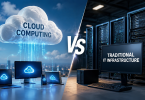

Cloud computing stopped being just a buzzword years ago. Today, it’s the invisible engine powering everything from your morning coffee order to complex international supply chains. What began as a simple way to store data off-site has evolved into something far more sophisticated, and that evolution shows no signs of slowing down.
Businesses across every sector are now waking up to the fact that emerging cloud technologies aren’t optional add-ons anymore. They’re the backbone of competitive advantage. Companies that fail to adapt risk being left behind by rivals who move faster, scale smarter, and respond to market shifts in real time.
In this article, we’ll walk through the most significant emerging cloud technologies reshaping global industries right now, why they matter, and what they mean for businesses trying to stay relevant in an increasingly digital-first world.
Why Cloud Innovation Matters More Than Ever
A decade ago, cloud adoption was mostly about cutting costs. Companies moved servers off-premises to save on hardware and maintenance. That reasoning still holds true, but it’s no longer the main driver.
Today, organizations turn to cloud technologies because they need speed, flexibility, and intelligence baked directly into their operations. Markets change overnight. Customer expectations shift constantly. Supply chains face unexpected disruptions. Businesses that rely on rigid, on-premises systems simply can’t keep pace with this level of unpredictability.
Emerging cloud technologies address this gap by offering scalable infrastructure that adjusts automatically to demand, intelligent tools that reduce manual work, and platforms that connect teams across continents as though they were sitting in the same room. This shift isn’t limited to tech-heavy sectors either. Manufacturing, healthcare, agriculture, finance, and even traditional retail are all being reshaped by these advancements.
Key Emerging Cloud Technologies Making an Impact
Edge Computing and Distributed Cloud
One of the most talked-about shifts in the cloud space is the move toward edge computing. Instead of sending every piece of data to a centralized server for processing, edge computing allows data to be processed closer to where it’s generated, whether that’s a factory floor sensor or a self-driving car.
This matters because latency can be the difference between a system that works flawlessly and one that fails at a critical moment. Industries like autonomous vehicles, industrial automation, and telemedicine depend on split-second responses. Distributed cloud architecture extends this idea further, letting companies run cloud services across multiple physical locations while still managing everything from a single control plane.
Serverless Computing
Serverless computing has quietly become one of the most practical emerging cloud technologies for businesses looking to reduce infrastructure headaches. Despite the name, servers are still very much involved, but developers no longer need to manage them directly.
This model allows teams to focus purely on writing code and building features, while the cloud provider handles scaling, maintenance, and resource allocation behind the scenes. Startups love it because it reduces upfront costs, and enterprises appreciate it because it speeds up development cycles significantly.
AI-Powered Cloud Platforms
Artificial intelligence and cloud computing have become deeply intertwined. Major cloud providers now bake machine learning capabilities directly into their platforms, making advanced AI accessible to companies that don’t have massive data science teams.
This combination is transforming industries in tangible ways. Retailers use AI-powered cloud tools to predict inventory needs before shortages happen. Banks use them to detect fraudulent transactions in milliseconds. Hospitals use them to analyze medical imaging faster and more accurately than ever before. The cloud provides the computing muscle, while AI provides the intelligence, and together they’re solving problems that once seemed impossible.
Multi-Cloud and Hybrid Cloud Strategies
Relying on a single cloud provider is becoming less common, and for good reason. Multi-cloud strategies allow businesses to spread workloads across different providers, reducing the risk of outages and avoiding vendor lock-in.
Hybrid cloud takes this a step further by blending public cloud resources with private infrastructure. This approach is particularly popular in industries like finance and healthcare, where certain sensitive data must remain on private servers due to regulatory requirements, while less sensitive workloads can run on public cloud platforms for cost efficiency.
Cloud-Native Development and Kubernetes
The way software gets built has fundamentally changed thanks to cloud-native development practices. Instead of building large, monolithic applications, developers now break software into smaller, independent components called microservices.
Kubernetes has become the go-to tool for managing these microservices at scale. It automates deployment, scaling, and management of containerized applications, which means businesses can update features without taking entire systems offline. This shift has made software development faster, more resilient, and easier to maintain across global teams.
Quantum Computing Meets the Cloud
Quantum computing is still in its early stages, but cloud providers are already offering quantum computing services to businesses and researchers who want to experiment without investing in expensive hardware. This is often called Quantum-as-a-Service.
While mainstream adoption is still years away, industries like pharmaceuticals, logistics, and financial modeling are already exploring how quantum algorithms could solve problems that traditional computers struggle with, such as simulating molecular structures or optimizing complex delivery routes.
How Different Industries Are Adapting
Healthcare
Cloud technologies have transformed how healthcare providers store patient records, collaborate across facilities, and deliver remote care. Telemedicine platforms rely heavily on cloud infrastructure to connect patients with doctors instantly, regardless of location. Meanwhile, AI-powered diagnostic tools hosted on cloud platforms are helping doctors catch diseases earlier and with greater accuracy.
Manufacturing
Smart factories are increasingly powered by edge computing and cloud-connected sensors. Machines communicate in real time, predicting maintenance needs before breakdowns occur and adjusting production schedules based on live demand data. This level of responsiveness was simply unimaginable a decade ago.
Financial Services
Banks and fintech companies are using cloud platforms to process transactions faster, detect fraud more effectively, and offer personalized financial products. Cloud-based infrastructure also allows smaller fintech startups to compete with established banks without needing massive capital investment in physical infrastructure.
Retail and E-commerce
Retailers are leveraging cloud-based AI to personalize shopping experiences, manage inventory across global warehouses, and predict customer demand with impressive accuracy. During peak shopping seasons, cloud scalability ensures websites don’t crash under heavy traffic, something that used to be a major concern for online retailers.
Challenges Businesses Face During Cloud Adoption
Despite all these benefits, adopting emerging cloud technologies isn’t without its challenges. Security remains a top concern, especially as businesses handle increasingly sensitive data across distributed systems. A single misconfiguration can expose an entire organization to serious risk.
Cost management is another common struggle. Cloud services often bill based on usage, and without careful monitoring, expenses can spiral out of control. Companies need dedicated teams or tools to track spending and optimize resource allocation continuously.
There’s also the challenge of skills gaps. Many organizations struggle to find employees who understand modern cloud architecture, container orchestration, and AI integration well enough to implement these technologies effectively. Training existing staff or hiring specialized talent has become a priority for companies serious about digital transformation.
A few practical steps can help businesses navigate this transition more smoothly:
- Start with a clear cloud strategy that aligns with specific business goals rather than adopting technology for its own sake
- Invest in employee training programs focused on cloud skills and security best practices
What the Future Holds
Looking ahead, emerging cloud technologies will likely become even more deeply integrated into daily business operations. Automation will handle more routine decision-making, freeing up human teams to focus on strategy and creativity. Sustainability will also play a bigger role, as cloud providers race to build greener data centers that consume less energy while delivering more computing power.
Industries that embrace this shift early will likely gain a lasting competitive edge. Those that hesitate may find themselves scrambling to catch up as customer expectations and market dynamics continue evolving at breakneck speed.
The businesses that thrive over the next decade won’t necessarily be the biggest or the oldest. They’ll be the ones most willing to experiment with emerging cloud technologies and adapt quickly when something isn’t working.
Frequently Asked Question
What are emerging cloud technologies?
They refer to newer cloud-based innovations like edge computing, serverless architecture, AI-integrated platforms, and quantum cloud services that go beyond traditional data storage and hosting.
Why are industries adopting cloud technology so quickly?
Because it offers speed, scalability, and cost efficiency that traditional infrastructure simply can’t match, especially in fast-changing markets.
Is cloud computing safe for sensitive industries like healthcare?
Yes, when properly configured. Most providers offer strong security measures, though businesses must still follow best practices and compliance regulations.
What is the difference between multi-cloud and hybrid cloud?
Multi-cloud uses multiple public cloud providers, while hybrid cloud combines public cloud with private, on-premises infrastructure.
How does edge computing benefit businesses?
It reduces latency by processing data closer to its source, which is critical for real-time applications like autonomous vehicles or industrial automation.
Will small businesses benefit from these technologies too?
Absolutely. Many cloud services are scalable and affordable, allowing smaller companies to access enterprise-level tools without huge upfront investment.
What’s the biggest challenge in adopting new cloud technologies?
Most businesses struggle with security management, cost control, and finding skilled talent to implement these systems effectively.
Conclusion
Emerging cloud technologies are no longer a distant trend reserved for tech giants. They’re actively reshaping how healthcare providers treat patients, how factories run production lines, how banks detect fraud, and how retailers keep shelves stocked. The pace of change is fast, and it’s only accelerating.