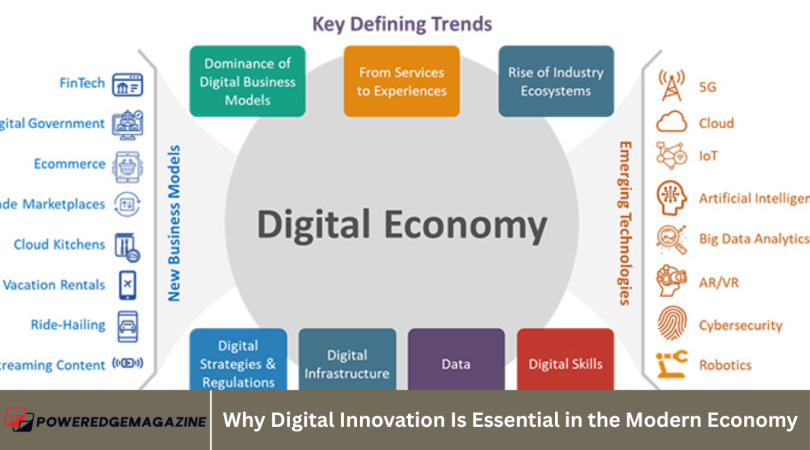

Digital innovation has become a major force behind economic growth and change. Businesses, governments, financial institutions, and consumers are increasingly using digital technologies to improve services, increase productivity, and create new opportunities. From artificial intelligence and cloud computing to e-commerce and digital payments, technology is influencing almost every part of the modern economy.
The importance of digital innovation goes beyond adopting new devices or software. It is changing how businesses operate, how people work, how products are created, and how customers interact with companies. Organizations that understand and use digital technology effectively can adapt more quickly to changing markets and customer expectations.
What Is Digital Innovation?
Digital innovation refers to the use of digital technologies to create new products, services, processes, or business models.
It can involve artificial intelligence, automation, cloud computing, data analytics, mobile technology, digital payments, blockchain, connected devices, and many other technologies.
Digital innovation can improve existing systems or create completely new ways of delivering value.
Why the Modern Economy Is Becoming Digital
The global economy has become increasingly connected through the internet and digital platforms.
Businesses can communicate with customers across borders, employees can work remotely, and consumers can purchase products from companies located thousands of miles away.
Digital infrastructure allows information and services to move quickly.
This connectivity has created a more dynamic economic environment.
Digital Innovation and Economic Growth
Digital innovation can contribute directly to economic growth.
Technology can help businesses produce more efficiently, reach new customers, reduce operating costs, and develop new products.
When businesses become more productive, they can potentially increase output and contribute to broader economic activity.
New technology industries also create jobs and investment opportunities.
Improving Business Productivity
Productivity is one of the most important benefits of digital innovation.
Businesses can automate repetitive tasks, manage information more efficiently, and use software to coordinate operations.
Employees can spend more time on creative and strategic activities.
Higher productivity can help businesses remain competitive while using resources more effectively.
Artificial Intelligence
Artificial intelligence is becoming a central part of the digital economy.
AI can analyze large amounts of information, recognize patterns, generate content, automate tasks, and support decision-making.
Businesses use AI in customer service, marketing, finance, manufacturing, healthcare, transportation, and many other industries.
As AI develops, its economic influence is likely to increase.
Generative AI
Generative AI has introduced new possibilities for creating digital content.
Businesses can use generative AI to assist with writing, coding, research, design, marketing, and communication.
It can help employees complete certain tasks more quickly.
However, companies need appropriate oversight to ensure accuracy, security, and responsible use.
Automation
Automation allows digital systems and machines to perform repetitive activities.
Businesses can automate administrative processes, customer communication, inventory management, manufacturing, and other workflows.
Automation can reduce errors and improve efficiency.
It may also allow employees to focus on higher-value work.
Cloud Computing
Cloud computing provides businesses with flexible access to digital infrastructure.
Companies can use cloud services for storage, software, databases, communication, and computing power.
Cloud technology makes it easier for businesses to expand their digital operations without building all infrastructure internally.
This can be particularly useful for growing companies.
Data and the Digital Economy
Data has become a valuable economic resource.
Businesses collect information about customers, markets, sales, operations, and products.
Data analytics can help companies identify trends and make better decisions.
Organizations that use data effectively may be able to respond more quickly to market changes.
E-Commerce
E-commerce has transformed global trade.
Businesses can sell products and services online to customers in different regions and countries.
Consumers can compare products, read reviews, make payments, and place orders without visiting physical stores.
This has created new opportunities for both large companies and small businesses.
Digital Payments
Digital payment systems have made financial transactions faster and more convenient.
Consumers can use mobile wallets, banking applications, cards, and other electronic payment methods.
Businesses can receive payments quickly and manage transactions digitally.
Digital payments also support the growth of online commerce.
Financial Technology
Financial technology is changing how people and businesses interact with financial services.
Digital banking, online lending, electronic payments, investment platforms, and automated financial tools are making financial services more accessible in many markets.
Fintech can also create new business models within the financial sector.
Digital Banking
Customers increasingly manage their financial activities through mobile applications and websites.
They can transfer money, pay bills, check balances, and access various financial services online.
Digital banking reduces the need for many routine visits to physical branches.
Global Business Opportunities
Digital technology allows companies to reach international markets more easily.
A small business can create an online store and potentially serve customers in different countries.
Digital marketing also allows businesses to target specific audiences based on location, interests, and behavior.
This can expand economic opportunities beyond traditional geographic limits.
Small Business Growth
Digital innovation is particularly valuable for small businesses.
Affordable software, cloud services, social media, e-commerce platforms, and digital advertising allow smaller companies to access tools that were once mainly available to large corporations.
This can help small businesses compete in broader markets.
Remote Work
Digital technology has changed the structure of the modern workforce.
Cloud platforms, video conferencing, project management systems, and online communication tools allow employees to work from different locations.
Remote and hybrid work can give companies access to a wider talent pool.
It can also provide employees with greater flexibility.
The Changing Workforce
Digital innovation is changing the skills businesses need.
Employees increasingly require knowledge of software, data analysis, cybersecurity, AI, digital communication, and other technologies.
At the same time, human skills such as creativity, critical thinking, communication, and problem-solving remain important.
Digital Skills and Education
Education systems have an important role in preparing people for a digital economy.
Students and workers need opportunities to develop technology-related skills.
Continuous learning is becoming increasingly important because digital tools can change rapidly.
Businesses also need to invest in employee training.
Digital Infrastructure
Reliable digital infrastructure is essential for a modern economy.
High-speed internet, mobile networks, cloud services, data centers, and secure communication systems support digital business activity.
Countries that invest in digital infrastructure can create stronger foundations for innovation.
Internet Access and Economic Opportunity
Access to reliable internet can influence education, employment, business, and financial opportunities.
People without adequate digital access may have difficulty participating fully in the digital economy.
Improving connectivity can help reduce this digital divide.
Digital Innovation in Manufacturing
Manufacturing is becoming increasingly connected.
Factories can use robotics, sensors, AI, automation, and data analytics to improve production.
Smart manufacturing systems can monitor equipment and identify potential problems.
This can increase efficiency and reduce downtime.
Digital Supply Chains
Digital systems can improve supply chain visibility.
Businesses can track shipments, monitor inventory, forecast demand, and identify potential disruptions.
Better supply chain management can help companies respond more quickly to economic changes.
Digital Healthcare
Technology is also transforming healthcare services.
Telehealth platforms, electronic records, remote monitoring devices, and AI-assisted systems can improve access and efficiency.
Digital healthcare can also help organizations manage information more effectively.
Digital Government
Governments are increasingly using digital platforms to provide public services.
Citizens may be able to apply for documents, make payments, access information, and communicate with government departments online.
Digital government services can reduce paperwork and improve convenience.
Smart Cities
Digital technologies can support smarter urban management.
Connected sensors can monitor traffic, energy consumption, public infrastructure, and environmental conditions.
Data can help cities make better decisions and improve services.
Cybersecurity
A digital economy also creates new security risks.
Businesses, governments, and individuals depend on digital systems for important activities.
Cyberattacks can cause financial losses, service disruptions, and reputational damage.
Strong cybersecurity is therefore essential for maintaining trust in digital systems.
Data Privacy
The growth of digital services has increased the importance of data privacy.
Companies collect significant amounts of information about customers and employees.
Responsible data management can help protect individuals and maintain trust.
Businesses need clear policies for collecting, storing, and using personal information.
Digital Innovation and Competition
Technology can change competition between companies.
Businesses that introduce convenient digital services may gain customers from traditional competitors.
Digital platforms can also allow new companies to enter established industries.
This can encourage businesses to improve products and services.
New Business Models
Digital innovation can create entirely new ways of doing business.
Subscription services, digital marketplaces, online platforms, software services, and on-demand models have become important parts of the modern economy.
These models can provide businesses with new revenue opportunities.
Sustainability
Digital innovation can support environmental goals.
Smart energy systems, data analytics, connected sensors, and automation can help businesses reduce waste and use resources more efficiently.
Technology can also improve transportation and energy management.
Digital Innovation and Consumer Behavior
Technology has changed how consumers make decisions.
People can research products online, compare prices, read reviews, and communicate with brands before making purchases.
Businesses need to understand these changing behaviors to remain competitive.
Personalized Services
Digital systems can provide personalized experiences based on customer preferences.
Online stores can recommend products, while digital platforms can customize content.
Personalization can improve customer engagement when businesses use data responsibly.
The Role of Social Media
Social media has become an important part of the digital economy.
Businesses use social platforms for marketing, customer service, brand building, and product discovery.
Creators and influencers have also created new economic opportunities through digital platforms.
Digital Entrepreneurship
Digital technology has lowered some barriers to starting a business.
Entrepreneurs can create websites, sell products online, promote services through social media, and use cloud-based tools without large physical infrastructure.
This has encouraged new forms of entrepreneurship.
Challenges of the Digital Economy
Digital innovation also creates challenges.
Businesses may face high technology costs, cybersecurity threats, privacy concerns, employee skill gaps, and difficulties integrating new systems.
Not everyone has equal access to digital tools.
Economic policies and education can help address these challenges.
The Digital Divide
The benefits of digital innovation are not always distributed equally.
People in areas with limited internet access may have fewer opportunities to benefit from online education, digital jobs, financial services, and e-commerce.
Reducing the digital divide is important for inclusive economic growth.
Regulation and Digital Innovation
Governments need to balance innovation with consumer protection.
Issues involving privacy, cybersecurity, competition, AI, digital payments, and online platforms may require updated regulations.
Clear and practical policies can support innovation while protecting users.
The Future of the Digital Economy
The digital economy will likely continue expanding.
Artificial intelligence, automation, cloud computing, advanced networks, connected devices, digital payments, and other technologies will influence businesses and consumers.
New technologies may also create industries that do not yet exist.
How Businesses Can Adapt
Businesses should focus on technologies that solve real problems.
They can begin by improving important processes, understanding customer needs, training employees, and strengthening digital security.
Companies should also monitor new technologies and be prepared to adapt as markets change.
The Importance of Innovation Culture
Technology alone does not create economic success.
Businesses need employees and leaders who are willing to experiment, learn, and improve.
A culture that supports innovation can help organizations respond to technological and economic changes.
Frequently Asked Questions
Why is digital innovation important for the modern economy?
Digital innovation improves productivity, creates new business models, expands market opportunities, and helps companies respond to changing customer and economic conditions.
How does technology support economic growth?
Technology can help businesses produce more efficiently, reduce costs, create new products and services, reach wider markets, and generate new employment opportunities.
How does AI affect the economy?
AI can automate tasks, analyze information, improve decision-making, increase productivity, and create new products and services across many industries.
Can small businesses benefit from digital innovation?
Yes. Small businesses can use affordable cloud services, e-commerce platforms, digital marketing, online payment systems, and AI tools to improve operations and reach customers.
What challenges does the digital economy face?
Major challenges include cybersecurity threats, data privacy concerns, unequal internet access, technology costs, workforce skill gaps, and the need for effective digital regulations.
Conclusion
Digital innovation is essential in the modern economy because it improves productivity, creates new business opportunities, changes consumer experiences, and supports economic growth. Artificial intelligence, automation, cloud computing, e-commerce, digital payments, data analytics, and connected technologies are transforming businesses and industries around the world. At the same time, challenges such as cybersecurity, privacy, digital inequality, and workforce development need careful attention.
The future economy will depend not only on adopting new technologies but also on using them responsibly and effectively. Businesses, workers, governments, and consumers that adapt to digital change can be better prepared for the opportunities of an increasingly connected economy.