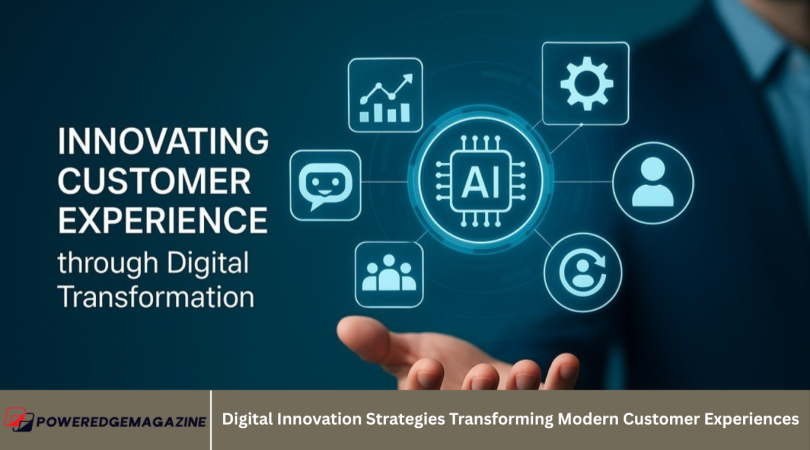

Digital Innovation Strategies Transforming Modern Customer Experiences
Digital technology has changed the way businesses communicate with customers, sell products, provide support, and build long-term relationships. Customers now expect businesses to offer fast, convenient, personalized, and reliable experiences across websites, mobile applications, social media, and other digital channels.
Digital innovation gives companies new ways to meet these expectations. Artificial intelligence, automation, data analytics, cloud computing, mobile technology, digital payments, and personalized services are helping businesses create smoother customer journeys. Companies that understand how to use these technologies effectively can improve customer satisfaction while also creating new opportunities for growth.
Why Customer Experience Matters
Customer experience includes every interaction a person has with a business.
It can begin when someone discovers a brand online and continue through product research, purchasing, payment, delivery, customer support, and future interactions.
A positive experience can encourage customers to return and recommend a business to others.
A poor experience can cause customers to choose competitors.
The Rise of Digital Customer Expectations
Customers have become accustomed to fast digital services.
People can order products from their phones, communicate with businesses through messaging platforms, make instant payments, and receive personalized recommendations.
These experiences have influenced expectations across many industries.
Businesses now need to consider speed, convenience, accessibility, and consistency when designing customer interactions.
Artificial Intelligence
Artificial intelligence is one of the most important technologies transforming customer experiences.
Businesses can use AI to understand customer behavior, answer questions, recommend products, analyze feedback, and provide personalized content.
AI can process large amounts of customer information quickly.
This allows companies to create more responsive digital experiences.
AI-Powered Customer Support
AI-powered support systems can answer common customer questions at any time.
Chatbots can provide information about products, orders, payments, returns, and basic account issues.
When a problem requires human attention, the system can transfer the conversation to a customer service representative.
This combination can improve response times while allowing employees to focus on more complex cases.
Personalized Recommendations
Personalization is becoming a major part of digital customer experiences.
Online stores can recommend products based on browsing and purchasing behavior.
Entertainment platforms can suggest content based on viewing preferences.
Personalized recommendations can help customers discover products and services that are more relevant to their interests.
Data-Driven Customer Experiences
Customer data can help businesses understand how people interact with their products and services.
Companies can analyze website activity, purchase history, feedback, and engagement patterns.
These insights can reveal what customers like and where they experience problems.
Businesses can use this information to improve their services.
Predictive Customer Service
Predictive analytics can help companies identify potential customer needs before problems become serious.
For example, businesses may identify customers who are likely to need assistance based on usage patterns.
Companies can then provide relevant information or support.
This approach can make customer service more proactive.
Mobile-First Experiences
Smartphones are central to modern customer behavior.
Customers use mobile devices to search for products, compare prices, read reviews, place orders, make payments, and communicate with businesses.
Companies therefore need mobile-friendly websites and applications.
A slow or difficult mobile experience can cause customers to leave.
Mobile Applications
Mobile applications can create direct connections between businesses and customers.
Apps can provide shopping, account management, customer support, loyalty programs, notifications, and personalized offers.
Businesses can also use applications to make frequently used services more convenient.
Digital Payments
Digital payment technology has made purchasing faster and easier.
Customers can use mobile wallets, banking applications, cards, and other electronic payment systems.
Simple payment processes can reduce friction during checkout.
Businesses that provide multiple trusted payment options can improve convenience for different types of customers.
E-Commerce Innovation
E-commerce has changed how customers discover and purchase products.
Modern online stores use search tools, filters, recommendations, reviews, digital payments, and order tracking.
Businesses can use these features to make online shopping easier.
A well-designed e-commerce experience can influence customer satisfaction and repeat purchases.
Social Media Experiences
Social media has become an important customer communication channel.
Customers can discover brands, ask questions, share feedback, and interact with businesses directly.
Companies can use social platforms to provide support and build relationships.
Quick and respectful responses can improve the way customers view a brand.
Social Commerce
Social commerce combines social media with online shopping.
Customers can discover products through videos, posts, creators, and advertisements.
Some platforms allow customers to move from product discovery to purchasing with minimal steps.
This creates a more connected customer journey.
Omnichannel Customer Experience
Customers often interact with businesses through multiple channels.
Someone might discover a product on social media, visit a website, purchase through an application, and later contact customer support.
An omnichannel strategy aims to make these interactions feel connected.
Customers should not have to repeat the same information every time they move between channels.
Consistent Brand Communication
Consistency is important across digital channels.
A business should provide similar information, branding, pricing, and service standards across its website, application, social media, and customer support channels.
Consistency can create trust and reduce confusion.
Automation
Automation can improve customer experiences by making common processes faster.
Businesses can automate order confirmations, appointment reminders, shipping updates, email messages, and other routine communications.
Customers receive useful information without waiting for an employee to respond manually.
Faster Response Times
Digital tools can significantly reduce response times.
Automated systems can provide immediate answers to simple questions.
Customer service platforms can organize requests and help employees prioritize urgent issues.
Faster support can improve customer satisfaction.
Cloud Technology
Cloud computing supports many modern customer experience systems.
Businesses can use cloud platforms to store customer information, manage applications, operate websites, and support communication tools.
Cloud systems can also help businesses scale their digital services when demand increases.
Customer Relationship Management
Customer relationship management systems help businesses organize information about customers.
Companies can track interactions, purchases, support requests, and preferences.
This information can help employees provide more informed and personalized service.
Voice Technology
Voice technology is creating another way for customers to interact with businesses.
Voice assistants can help users search for information, control devices, make requests, and access services.
Businesses may increasingly use voice interfaces as part of their digital strategies.
Augmented Reality
Augmented reality can make digital shopping more interactive.
Customers can use AR features to visualize certain products in their surroundings before making a purchase.
This can be particularly useful for products where appearance, size, or placement matters.
AR may help customers feel more confident about online purchases.
Virtual Reality
Virtual reality can create immersive customer experiences.
Businesses can use VR for product demonstrations, virtual tours, training, entertainment, and interactive experiences.
Although VR adoption varies between industries, it provides another way for brands to engage customers.
Loyalty Programs
Digital loyalty programs can help businesses maintain long-term customer relationships.
Mobile applications can allow customers to collect rewards, receive personalized offers, and track their activity.
Businesses can also use loyalty data to better understand customer preferences.
Personalized Marketing
Digital innovation allows businesses to make marketing more relevant.
Companies can use customer information to deliver targeted emails, advertisements, product suggestions, and promotions.
Personalized marketing can be more effective when customers receive information that matches their interests.
However, businesses need to use customer data responsibly.
Customer Feedback
Digital platforms make it easier for businesses to collect customer feedback.
Online reviews, surveys, social media comments, and support interactions can provide valuable information.
Companies can analyze this feedback to identify common problems.
Listening to customers can help businesses improve products and services.
Sentiment Analysis
AI-powered sentiment analysis can help businesses understand how customers feel about their brand.
Systems can analyze large volumes of comments and reviews to identify positive, negative, or neutral patterns.
This can help companies identify issues that need attention.
Self-Service Options
Many customers prefer to solve simple problems themselves.
Businesses can provide knowledge bases, frequently asked questions, tutorials, account management tools, and automated support.
Effective self-service options can save customers time.
They can also reduce pressure on customer support teams.
Personalization Without Losing Trust
Personalization can improve customer experiences, but excessive data collection can create concerns.
Customers want useful services without feeling that their privacy is being ignored.
Businesses should be transparent about data collection and provide appropriate privacy protections.
Trust is an important part of a successful digital relationship.
Cybersecurity and Customer Trust
Security has a direct impact on customer experience.
Customers expect their personal and payment information to be protected.
A security incident can damage trust and cause customers to reconsider their relationship with a company.
Businesses therefore need strong cybersecurity systems and responsible data practices.
Accessibility
Digital customer experiences should be accessible to people with different needs.
Websites and applications should be designed so that as many customers as possible can use them.
Accessibility can improve usability and expand the potential customer base.
Multilingual Customer Support
Global businesses often serve customers who speak different languages.
Digital translation tools and multilingual support systems can make communication easier.
Providing information in a customer’s preferred language can improve understanding and satisfaction.
Digital Experiences in Retail
Retailers are using technology to connect physical and digital shopping.
Customers can check product availability online, order through an application, receive digital receipts, and track deliveries.
Some retailers are also experimenting with smart stores and interactive technologies.
Digital Experiences in Banking
Banking has changed significantly through digital innovation.
Customers can manage accounts, transfer money, pay bills, apply for services, and receive support through mobile applications and online platforms.
Digital banking provides convenience while reducing the need for customers to visit physical branches for routine activities.
Digital Healthcare Experiences
Healthcare organizations are also using digital technology to improve customer and patient experiences.
Online appointment systems, digital communication, remote services, and electronic information systems can make certain interactions easier.
Technology can help reduce administrative friction and improve access to information.
Digital Travel Experiences
Travel companies use digital technology to simplify booking, payments, communication, and trip management.
Customers can search for options, make reservations, receive notifications, and manage travel information through digital platforms.
These services can make travel planning more convenient.
The Role of Human Interaction
Digital innovation does not mean removing people from customer service.
Some situations require empathy, judgment, and personal communication.
The strongest customer experience strategies often combine automation with human support.
Technology should make human interactions more effective rather than simply replace them.
Employee Experience and Customer Experience
Employee experience can influence customer experience.
Employees with effective digital tools can respond to customers more quickly and accurately.
Poor internal systems can make customer service slower.
Companies should therefore consider employee needs when designing customer experience technology.
Measuring Customer Experience
Businesses need to measure whether digital strategies are working.
Customer satisfaction, retention, conversion rates, support response times, reviews, and repeat purchases can provide useful information.
Regular measurement helps companies identify areas that need improvement.
Challenges of Digital Customer Experience
Digital innovation also creates challenges.
Businesses may face technology costs, integration problems, cybersecurity threats, privacy concerns, and employee training requirements.
Customers can also become frustrated if companies introduce complicated technology without improving usability.
The Importance of Simplicity
More technology does not always mean a better customer experience.
Customers usually want services that are simple and easy to use.
Businesses should focus on removing unnecessary steps and making important tasks straightforward.
The Future of Customer Experience
The future of customer experience will likely involve deeper use of AI, automation, personalization, predictive analytics, mobile technology, and connected devices.
Businesses may increasingly anticipate customer needs instead of simply reacting to requests.
However, trust, privacy, accessibility, and human interaction will remain important.
What Businesses Should Focus On
Companies should start with customer needs rather than technology trends.
They should identify where customers experience difficulties and determine how digital tools can solve those problems.
Businesses should also test new systems, collect feedback, and continuously improve the customer journey.
Conclusion
Digital innovation strategies are transforming modern customer experiences by making interactions faster, more convenient, personalized, and connected. Artificial intelligence, automation, mobile applications, digital payments, data analytics, cloud computing, social commerce, and self-service platforms are changing how customers communicate with businesses and make purchasing decisions. However, successful digital experiences require more than advanced technology. Companies need strong cybersecurity, responsible data practices, accessible platforms, simple interfaces, and human support when customers need it. Businesses that combine useful technology with a genuine understanding of customer needs can build stronger relationships and create lasting competitive advantages.
Frequently Asked Questions
How does digital innovation improve customer experiences?
Digital innovation can make customer interactions faster, more convenient, personalized, accessible, and consistent across different channels.
How is AI changing customer service?
AI can answer common questions, provide recommendations, analyze feedback, automate communication, and help customer service teams handle requests more efficiently.
Why is personalization important?
Personalization allows businesses to provide products, content, recommendations, and offers that are more relevant to individual customers.
Can digital technology replace human customer service?
Technology can handle many routine tasks, but human support remains important for complex issues that require empathy, judgment, or personal communication.
What is the future of digital customer experiences?
Future customer experiences are likely to include greater use of AI, automation, predictive analytics, mobile technology, personalization, and connected digital services while maintaining strong focus on privacy and trust.Digital technology has changed the way businesses communicate with customers, sell products, provide support, and build long-term relationships. Customers now expect businesses to offer fast, convenient, personalized, and reliable experiences across websites, mobile applications, social media, and other digital channels.
Digital innovation gives companies new ways to meet these expectations. Artificial intelligence, automation, data analytics, cloud computing, mobile technology, digital payments, and personalized services are helping businesses create smoother customer journeys. Companies that understand how to use these technologies effectively can improve customer satisfaction while also creating new opportunities for growth.
Why Customer Experience Matters
Customer experience includes every interaction a person has with a business.
It can begin when someone discovers a brand online and continue through product research, purchasing, payment, delivery, customer support, and future interactions.
A positive experience can encourage customers to return and recommend a business to others.
A poor experience can cause customers to choose competitors.
The Rise of Digital Customer Expectations
Customers have become accustomed to fast digital services.
People can order products from their phones, communicate with businesses through messaging platforms, make instant payments, and receive personalized recommendations.
These experiences have influenced expectations across many industries.
Businesses now need to consider speed, convenience, accessibility, and consistency when designing customer interactions.
Artificial Intelligence
Artificial intelligence is one of the most important technologies transforming customer experiences.
Businesses can use AI to understand customer behavior, answer questions, recommend products, analyze feedback, and provide personalized content.
AI can process large amounts of customer information quickly.
This allows companies to create more responsive digital experiences.
AI-Powered Customer Support
AI-powered support systems can answer common customer questions at any time.
Chatbots can provide information about products, orders, payments, returns, and basic account issues.
When a problem requires human attention, the system can transfer the conversation to a customer service representative.
This combination can improve response times while allowing employees to focus on more complex cases.
Personalized Recommendations
Personalization is becoming a major part of digital customer experiences.
Online stores can recommend products based on browsing and purchasing behavior.
Entertainment platforms can suggest content based on viewing preferences.
Personalized recommendations can help customers discover products and services that are more relevant to their interests.
Data-Driven Customer Experiences
Customer data can help businesses understand how people interact with their products and services.
Companies can analyze website activity, purchase history, feedback, and engagement patterns.
These insights can reveal what customers like and where they experience problems.
Businesses can use this information to improve their services.
Predictive Customer Service
Predictive analytics can help companies identify potential customer needs before problems become serious.
For example, businesses may identify customers who are likely to need assistance based on usage patterns.
Companies can then provide relevant information or support.
This approach can make customer service more proactive.
Mobile-First Experiences
Smartphones are central to modern customer behavior.
Customers use mobile devices to search for products, compare prices, read reviews, place orders, make payments, and communicate with businesses.
Companies therefore need mobile-friendly websites and applications.
A slow or difficult mobile experience can cause customers to leave.
Mobile Applications
Mobile applications can create direct connections between businesses and customers.
Apps can provide shopping, account management, customer support, loyalty programs, notifications, and personalized offers.
Businesses can also use applications to make frequently used services more convenient.
Digital Payments
Digital payment technology has made purchasing faster and easier.
Customers can use mobile wallets, banking applications, cards, and other electronic payment systems.
Simple payment processes can reduce friction during checkout.
Businesses that provide multiple trusted payment options can improve convenience for different types of customers.
E-Commerce Innovation
E-commerce has changed how customers discover and purchase products.
Modern online stores use search tools, filters, recommendations, reviews, digital payments, and order tracking.
Businesses can use these features to make online shopping easier.
A well-designed e-commerce experience can influence customer satisfaction and repeat purchases.
Social Media Experiences
Social media has become an important customer communication channel.
Customers can discover brands, ask questions, share feedback, and interact with businesses directly.
Companies can use social platforms to provide support and build relationships.
Quick and respectful responses can improve the way customers view a brand.
Social Commerce
Social commerce combines social media with online shopping.
Customers can discover products through videos, posts, creators, and advertisements.
Some platforms allow customers to move from product discovery to purchasing with minimal steps.
This creates a more connected customer journey.
Omnichannel Customer Experience
Customers often interact with businesses through multiple channels.
Someone might discover a product on social media, visit a website, purchase through an application, and later contact customer support.
An omnichannel strategy aims to make these interactions feel connected.
Customers should not have to repeat the same information every time they move between channels.
Consistent Brand Communication
Consistency is important across digital channels.
A business should provide similar information, branding, pricing, and service standards across its website, application, social media, and customer support channels.
Consistency can create trust and reduce confusion.
Automation
Automation can improve customer experiences by making common processes faster.
Businesses can automate order confirmations, appointment reminders, shipping updates, email messages, and other routine communications.
Customers receive useful information without waiting for an employee to respond manually.
Faster Response Times
Digital tools can significantly reduce response times.
Automated systems can provide immediate answers to simple questions.
Customer service platforms can organize requests and help employees prioritize urgent issues.
Faster support can improve customer satisfaction.
Cloud Technology
Cloud computing supports many modern customer experience systems.
Businesses can use cloud platforms to store customer information, manage applications, operate websites, and support communication tools.
Cloud systems can also help businesses scale their digital services when demand increases.
Customer Relationship Management
Customer relationship management systems help businesses organize information about customers.
Companies can track interactions, purchases, support requests, and preferences.
This information can help employees provide more informed and personalized service.
Voice Technology
Voice technology is creating another way for customers to interact with businesses.
Voice assistants can help users search for information, control devices, make requests, and access services.
Businesses may increasingly use voice interfaces as part of their digital strategies.
Augmented Reality
Augmented reality can make digital shopping more interactive.
Customers can use AR features to visualize certain products in their surroundings before making a purchase.
This can be particularly useful for products where appearance, size, or placement matters.
AR may help customers feel more confident about online purchases.
Virtual Reality
Virtual reality can create immersive customer experiences.
Businesses can use VR for product demonstrations, virtual tours, training, entertainment, and interactive experiences.
Although VR adoption varies between industries, it provides another way for brands to engage customers.
Loyalty Programs
Digital loyalty programs can help businesses maintain long-term customer relationships.
Mobile applications can allow customers to collect rewards, receive personalized offers, and track their activity.
Businesses can also use loyalty data to better understand customer preferences.
Personalized Marketing
Digital innovation allows businesses to make marketing more relevant.
Companies can use customer information to deliver targeted emails, advertisements, product suggestions, and promotions.
Personalized marketing can be more effective when customers receive information that matches their interests.
However, businesses need to use customer data responsibly.
Customer Feedback
Digital platforms make it easier for businesses to collect customer feedback.
Online reviews, surveys, social media comments, and support interactions can provide valuable information.
Companies can analyze this feedback to identify common problems.
Listening to customers can help businesses improve products and services.
Sentiment Analysis
AI-powered sentiment analysis can help businesses understand how customers feel about their brand.
Systems can analyze large volumes of comments and reviews to identify positive, negative, or neutral patterns.
This can help companies identify issues that need attention.
Self-Service Options
Many customers prefer to solve simple problems themselves.
Businesses can provide knowledge bases, frequently asked questions, tutorials, account management tools, and automated support.
Effective self-service options can save customers time.
They can also reduce pressure on customer support teams.
Personalization Without Losing Trust
Personalization can improve customer experiences, but excessive data collection can create concerns.
Customers want useful services without feeling that their privacy is being ignored.
Businesses should be transparent about data collection and provide appropriate privacy protections.
Trust is an important part of a successful digital relationship.
Cybersecurity and Customer Trust
Security has a direct impact on customer experience.
Customers expect their personal and payment information to be protected.
A security incident can damage trust and cause customers to reconsider their relationship with a company.
Businesses therefore need strong cybersecurity systems and responsible data practices.
Accessibility
Digital customer experiences should be accessible to people with different needs.
Websites and applications should be designed so that as many customers as possible can use them.
Accessibility can improve usability and expand the potential customer base.
Multilingual Customer Support
Global businesses often serve customers who speak different languages.
Digital translation tools and multilingual support systems can make communication easier.
Providing information in a customer’s preferred language can improve understanding and satisfaction.
Digital Experiences in Retail
Retailers are using technology to connect physical and digital shopping.
Customers can check product availability online, order through an application, receive digital receipts, and track deliveries.
Some retailers are also experimenting with smart stores and interactive technologies.
Digital Experiences in Banking
Banking has changed significantly through digital innovation.
Customers can manage accounts, transfer money, pay bills, apply for services, and receive support through mobile applications and online platforms.
Digital banking provides convenience while reducing the need for customers to visit physical branches for routine activities.
Digital Healthcare Experiences
Healthcare organizations are also using digital technology to improve customer and patient experiences.
Online appointment systems, digital communication, remote services, and electronic information systems can make certain interactions easier.
Technology can help reduce administrative friction and improve access to information.
Digital Travel Experiences
Travel companies use digital technology to simplify booking, payments, communication, and trip management.
Customers can search for options, make reservations, receive notifications, and manage travel information through digital platforms.
These services can make travel planning more convenient.
The Role of Human Interaction
Digital innovation does not mean removing people from customer service.
Some situations require empathy, judgment, and personal communication.
The strongest customer experience strategies often combine automation with human support.
Technology should make human interactions more effective rather than simply replace them.
Employee Experience and Customer Experience
Employee experience can influence customer experience.
Employees with effective digital tools can respond to customers more quickly and accurately.
Poor internal systems can make customer service slower.
Companies should therefore consider employee needs when designing customer experience technology.
Measuring Customer Experience
Businesses need to measure whether digital strategies are working.
Customer satisfaction, retention, conversion rates, support response times, reviews, and repeat purchases can provide useful information.
Regular measurement helps companies identify areas that need improvement.
Challenges of Digital Customer Experience
Digital innovation also creates challenges.
Businesses may face technology costs, integration problems, cybersecurity threats, privacy concerns, and employee training requirements.
Customers can also become frustrated if companies introduce complicated technology without improving usability.
The Importance of Simplicity
More technology does not always mean a better customer experience.
Customers usually want services that are simple and easy to use.
Businesses should focus on removing unnecessary steps and making important tasks straightforward.
The Future of Customer Experience
The future of customer experience will likely involve deeper use of AI, automation, personalization, predictive analytics, mobile technology, and connected devices.
Businesses may increasingly anticipate customer needs instead of simply reacting to requests.
However, trust, privacy, accessibility, and human interaction will remain important.
What Businesses Should Focus On
Companies should start with customer needs rather than technology trends.
They should identify where customers experience difficulties and determine how digital tools can solve those problems.
Businesses should also test new systems, collect feedback, and continuously improve the customer journey.
Frequently Asked Questions
How does digital innovation improve customer experiences?
Digital innovation can make customer interactions faster, more convenient, personalized, accessible, and consistent across different channels.
How is AI changing customer service?
AI can answer common questions, provide recommendations, analyze feedback, automate communication, and help customer service teams handle requests more efficiently.
Why is personalization important?
Personalization allows businesses to provide products, content, recommendations, and offers that are more relevant to individual customers.
Can digital technology replace human customer service?
Technology can handle many routine tasks, but human support remains important for complex issues that require empathy, judgment, or personal communication.
What is the future of digital customer experiences?
Future customer experiences are likely to include greater use of AI, automation, predictive analytics, mobile technology, personalization, and connected digital services while maintaining strong focus on privacy and trust.
Conclusion
Digital innovation strategies are transforming modern customer experiences by making interactions faster, more convenient, personalized, and connected. Artificial intelligence, automation, mobile applications, digital payments, data analytics, cloud computing, social commerce, and self-service platforms are changing how customers communicate with businesses and make purchasing decisions.
However, successful digital experiences require more than advanced technology. Companies need strong cybersecurity, responsible data practices, accessible platforms, simple interfaces, and human support when customers need it. Businesses that combine useful technology with a genuine understanding of customer needs can build stronger relationships and create lasting competitive advantages.