
Cybersecurity has entered a new era where traditional security tools alone are no longer enough to defend against increasingly sophisticated cyber threats. Modern attackers use advanced techniques, automation, and even artificial intelligence to launch phishing campaigns, ransomware attacks, malware, and data breaches. As digital environments become more complex, organizations require faster and smarter ways to identify and respond to potential threats. Artificial intelligence has emerged as one of the most powerful technologies helping businesses strengthen their cybersecurity defenses.
AI-powered cybersecurity solutions analyze enormous volumes of security data, recognize unusual patterns, and respond to suspicious activities far more quickly than manual monitoring alone. By combining machine learning, automation, and predictive analytics, these systems help organizations reduce security risks while improving operational efficiency. As cyber threats continue to evolve, AI is becoming an essential component of modern cybersecurity strategies.
Why AI Is Transforming Cybersecurity
The number of cyber threats grows every day, making it increasingly difficult for security teams to monitor every system manually. Businesses operate across cloud platforms, mobile devices, remote work environments, and interconnected networks, creating a much larger attack surface than ever before.
Artificial intelligence helps solve this challenge by processing vast amounts of security information in real time. AI systems continuously monitor networks, applications, and user behavior to identify activities that may indicate cyberattacks. This allows organizations to detect threats earlier, respond faster, and reduce the overall impact of security incidents.
Faster Threat Detection
One of the greatest advantages of AI-powered cybersecurity is its ability to identify threats almost instantly. Traditional security tools often rely on known attack signatures, while AI analyzes behavior and identifies unusual activity that may indicate new or previously unknown threats.
This proactive approach allows security teams to investigate suspicious events before attackers can cause significant damage.
Automated Incident Response
Modern cybersecurity platforms increasingly use artificial intelligence to automate routine security tasks. AI can isolate compromised devices, block malicious connections, prioritize alerts, and initiate predefined security responses without waiting for manual intervention.
Automation reduces response times while allowing cybersecurity professionals to focus on more complex investigations and strategic security planning.
Improved Phishing Protection
Phishing attacks remain one of the most common methods used by cybercriminals to steal sensitive information. AI-powered email security systems analyze message content, sender behavior, attachments, and embedded links to identify suspicious emails before they reach users.
As phishing campaigns become more convincing, artificial intelligence helps improve detection accuracy while reducing false alarms.
Enhanced Malware Detection
Cybercriminals continuously develop new malware variants designed to bypass traditional antivirus software. AI-based security platforms analyze file behavior, system activity, and execution patterns rather than relying only on known malware signatures.
This behavior-based approach allows organizations to identify previously unseen malware and respond before infections spread across networks.
Strengthening Endpoint Security
Businesses now manage thousands of laptops, mobile devices, servers, and workstations connected to corporate networks. AI-powered endpoint protection continuously monitors these devices for suspicious behavior, unusual processes, unauthorized access attempts, and potential ransomware activity.
Continuous monitoring improves visibility while reducing the likelihood of successful endpoint attacks.
Predictive Threat Intelligence
Artificial intelligence helps organizations anticipate future cyber threats by analyzing historical attack data, emerging vulnerabilities, and global threat intelligence.
Predictive analytics allows security teams to prioritize vulnerabilities, improve risk management, and strengthen defenses before attackers exploit potential weaknesses.
Supporting Cloud Security
As organizations increasingly adopt cloud computing, protecting cloud environments has become more challenging. AI-powered cloud security platforms monitor user activity, detect unusual access patterns, identify configuration errors, and help prevent unauthorized access to cloud resources.
Continuous monitoring improves cloud security while supporting compliance with organizational policies.
Reducing Human Error
Human error remains one of the leading causes of cybersecurity incidents. AI assists security teams by automatically identifying risky behavior, detecting suspicious login attempts, and providing intelligent recommendations during security investigations.
While artificial intelligence cannot replace employee awareness training, it significantly improves an organization’s ability to detect mistakes before they become major security incidents.
Challenges of AI in Cybersecurity
Although artificial intelligence offers significant advantages, organizations must also recognize its limitations. AI systems require high-quality data, continuous training, and regular updates to maintain accuracy. Poorly configured models may generate false positives or fail to recognize certain threats.
Cybercriminals are also beginning to use AI to create more sophisticated phishing attacks, automate malware development, and identify vulnerabilities more efficiently. This ongoing competition requires businesses to continuously improve their defensive technologies.
The Future of AI-Powered Cybersecurity
Artificial intelligence will continue playing an increasingly important role in cybersecurity. Future security platforms are expected to provide greater automation, improved threat prediction, faster incident response, and more intelligent risk assessment capabilities.
As organizations continue adopting cloud computing, Internet of Things devices, and digital transformation initiatives, AI will become essential for protecting increasingly complex technology environments.
Frequently Asked Questions
What is AI-powered cybersecurity?
AI-powered cybersecurity uses artificial intelligence and machine learning to detect threats, analyze security data, automate responses, and improve overall protection against cyberattacks.
How does AI detect cyber threats?
AI analyzes network traffic, user behavior, system activity, and security events to identify unusual patterns that may indicate malicious activity.
Can AI prevent ransomware attacks?
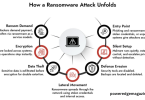
AI can help detect ransomware behavior early, isolate infected devices, and automate security responses, reducing the impact of ransomware attacks. However, it should be combined with backups, employee training, and other security measures.
Is artificial intelligence replacing cybersecurity professionals?
No. AI supports cybersecurity professionals by automating repetitive tasks and improving threat detection, but human expertise remains essential for strategic planning, investigations, and decision-making.
Why is AI important for modern cybersecurity?
AI improves speed, accuracy, automation, and threat detection capabilities, enabling organizations to defend against increasingly sophisticated cyber threats more effectively.
Conclusion
Artificial intelligence is transforming cybersecurity by helping organizations detect threats faster, automate security operations, and respond more effectively to evolving cyberattacks. As digital environments become more complex and cybercriminals adopt increasingly advanced techniques, AI-powered cybersecurity solutions provide businesses with stronger visibility, improved efficiency, and greater resilience. While artificial intelligence is not a complete replacement for human expertise or comprehensive security strategies, it has become an essential tool for protecting modern organizations against today’s rapidly changing cyber threat landscape.