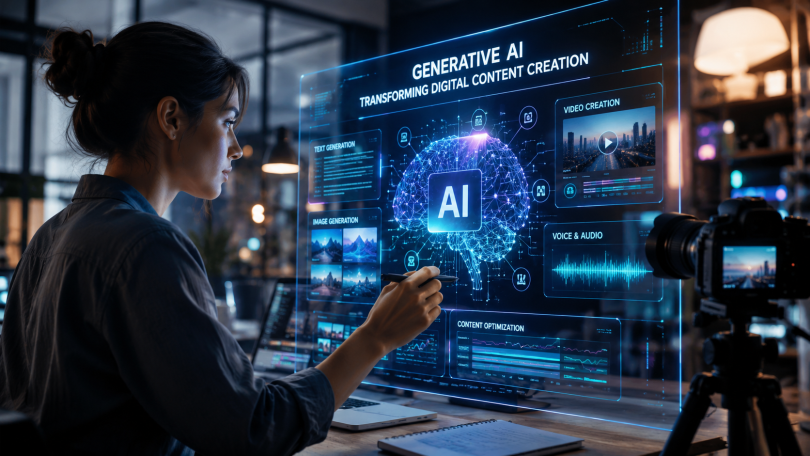

Digital content creation has changed dramatically over the last decade. Businesses, marketers, bloggers, designers, and social media creators are constantly searching for faster and smarter ways to produce high-quality content. As online competition continues to grow, the demand for fresh, engaging, and personalized content has reached an all-time high. This is where generative AI is making a massive impact.
From writing blog posts and designing graphics to producing videos and generating music, artificial intelligence is reshaping the creative process in ways that once seemed impossible. Generative AI tools are helping creators save time, improve productivity, and unlock new levels of innovation. Instead of replacing human creativity, these technologies are enhancing it by handling repetitive tasks and supporting idea generation.
Today, companies of all sizes are integrating AI-powered solutions into their content strategies. Whether it is a startup creating social media campaigns or a global brand producing personalized customer experiences, generative AI is becoming an essential part of digital communication.
Understanding Generative AI
Generative AI refers to artificial intelligence systems capable of creating original content based on patterns learned from large datasets. Unlike traditional AI models that focus mainly on analyzing information or automating simple tasks, generative AI can produce entirely new outputs.
These outputs may include written articles, digital artwork, audio files, videos, animations, computer code, and even interactive experiences. AI models learn by studying enormous amounts of existing content and then generating similar but unique material.
The rapid advancement of machine learning and natural language processing technologies has made generative AI more accessible than ever before. Tools powered by AI can now produce content within seconds that previously required hours or even days of manual work.
This technological shift is transforming industries ranging from entertainment and advertising to education and e-commerce.
The Evolution of Digital Content Creation
Before AI-driven tools became widely available, digital content creation was a highly manual process. Writers spent countless hours researching and drafting articles. Designers worked extensively on visual elements. Video editors invested significant time in production and post-production tasks.
Although creativity remains a human skill, technology has always influenced how content is produced. Early software tools simplified editing and publishing, while social media platforms changed how audiences consume information.
Generative AI represents the next major evolution. It accelerates workflows while enabling creators to experiment with ideas more efficiently. Instead of starting from scratch, creators can use AI-generated drafts, visuals, or concepts as a foundation for refinement and personalization.
This shift is not only improving efficiency but also democratizing creativity. Individuals without advanced technical skills can now produce professional-quality content using AI-powered platforms.
How Generative AI Is Transforming Digital Content Creation
AI-Powered Writing and Blogging
One of the biggest areas where generative AI is making an impact is content writing. Bloggers, marketers, and businesses are using AI tools to create articles, social media captions, product descriptions, newsletters, and advertising copy.
AI writing assistants can quickly generate ideas, improve grammar, optimize SEO, and structure content effectively. This allows writers to focus more on creativity, storytelling, and strategy rather than repetitive editing tasks.
Content teams can now produce larger volumes of content while maintaining consistency. This is especially valuable for businesses that need to publish regularly to stay visible in search engine rankings.
Generative AI also supports multilingual content creation, enabling companies to reach global audiences more efficiently. Instead of manually translating every piece of content, AI tools can adapt messages for different regions and languages.
However, human oversight remains essential. AI-generated content performs best when refined by skilled writers who ensure accuracy, originality, and emotional depth.
Revolutionizing Graphic Design
Graphic design has also experienced a major transformation through generative AI. Designers can now create images, illustrations, logos, and marketing visuals using simple text prompts.
AI-powered image generators allow creators to experiment with concepts rapidly. This speeds up brainstorming sessions and helps teams visualize ideas more effectively.
For businesses, this means lower production costs and faster turnaround times. Small companies that once struggled to afford professional design services can now create attractive visuals for websites, advertisements, and social media campaigns.
Generative AI is also helping designers automate repetitive tasks such as background removal, color correction, image enhancement, and layout adjustments. As a result, designers can dedicate more time to high-level creative thinking.
Rather than eliminating the role of designers, AI is becoming a collaborative tool that enhances artistic capabilities.
Video Content Production Becomes Faster
Video content dominates digital marketing today. Platforms like YouTube, TikTok, Instagram, and streaming services have increased the demand for engaging video experiences.
Generative AI is simplifying many aspects of video production. AI tools can generate scripts, edit footage, create animations, add subtitles, produce voiceovers, and even create realistic avatars.
This technology significantly reduces production time and costs. Businesses can create promotional videos, tutorials, and social media clips without requiring large production teams.
AI-powered editing software can automatically identify highlights, remove unnecessary pauses, and optimize videos for different platforms. This helps creators publish content more consistently and efficiently.
Personalized video marketing is another growing trend. AI allows brands to create customized video experiences tailored to individual viewers, improving engagement and customer satisfaction.
Personalized Content Experiences
Modern consumers expect personalized experiences. They want content that matches their interests, preferences, and behaviors. Generative AI enables businesses to deliver highly targeted content at scale.
AI systems analyze user data to generate customized emails, product recommendations, advertisements, and website experiences. This level of personalization helps brands build stronger relationships with customers.
For example, streaming platforms use AI to recommend movies and shows based on viewing history. E-commerce companies generate personalized shopping suggestions that increase conversion rates.
Content creators also benefit from audience insights powered by AI analytics. Understanding what audiences prefer allows creators to develop more engaging and relevant material.
As personalization becomes increasingly important, generative AI is playing a central role in shaping digital communication strategies.
The Benefits of Generative AI in Content Creation
Generative AI offers several major advantages that are changing how digital content is produced and distributed.
- Improved Productivity: AI tools automate repetitive tasks, allowing creators to work faster and more efficiently.
- Cost Reduction: Businesses can reduce production expenses while still creating high-quality content.
- Enhanced Creativity: AI assists with brainstorming, idea generation, and experimentation.
- Scalability: Companies can produce larger amounts of content for multiple platforms and audiences.
- Personalization: AI enables tailored experiences that improve audience engagement.
These benefits explain why organizations across industries are rapidly adopting generative AI technologies.
The Human Element Still Matters
Despite the impressive capabilities of AI, human creativity remains irreplaceable. AI can generate content, but it does not fully understand emotions, cultural nuances, or authentic storytelling in the same way humans do.
Successful content creation still depends on originality, empathy, strategic thinking, and emotional connection. Human creators bring personality and meaning to content that AI alone cannot replicate.
Generative AI works best as a collaborative partner rather than a complete replacement for creative professionals. Writers, designers, marketers, and filmmakers who learn to work alongside AI will likely become more productive and innovative.
The future of content creation is not about humans versus machines. It is about combining human creativity with AI efficiency.
Challenges and Ethical Concerns
Content Authenticity and Misinformation
One of the major concerns surrounding generative AI is the spread of misinformation. AI systems can generate realistic text, images, and videos that may be misleading or entirely false.
Deepfake technology, for example, has raised serious ethical questions. Manipulated media can damage reputations, spread fake news, and create confusion online.
As AI-generated content becomes more common, audiences may struggle to distinguish between authentic and artificial material.
Businesses and creators must prioritize transparency and ethical practices when using AI-generated content.
Copyright and Ownership Issues
Generative AI models learn from massive datasets that may include copyrighted material. This has created ongoing debates about intellectual property rights and ownership.
Questions surrounding who owns AI-generated content continue to evolve legally and ethically. Content creators and companies must stay informed about regulations and licensing requirements.
Protecting original work while encouraging innovation remains a complex challenge for the digital industry.
Risk of Over-Reliance on AI
While AI tools improve efficiency, over-dependence can reduce originality and creativity. If everyone relies on similar AI systems, digital content may become repetitive and less distinctive.
Creators should use AI as a support tool rather than allowing it to dominate the creative process entirely.
Maintaining a unique voice and authentic brand identity remains essential in an increasingly automated world.
Generative AI in Social Media Marketing
Social media platforms require constant content production. Brands need engaging captions, visuals, videos, and campaigns to remain competitive.
Generative AI helps marketers manage these demands more efficiently. AI-powered systems can generate content ideas, schedule posts, analyze engagement, and create targeted advertisements.
This allows businesses to respond quickly to trends and audience behavior. Real-time content creation has become increasingly important in fast-moving digital environments.
Influencers and content creators are also benefiting from AI tools that streamline editing, improve visuals, and optimize posting strategies.
As social media continues to evolve, AI-driven automation will likely become even more integrated into marketing workflows.
AI and SEO Content Optimization
Search engine optimization remains a critical component of digital marketing. Generative AI is helping marketers create SEO-friendly content more efficiently.
AI tools can identify relevant keywords, optimize headings, improve readability, and analyze search trends. This helps businesses produce content that ranks better on search engines while still providing value to readers.
AI can also assist with topic research and competitor analysis. By understanding audience interests and search behavior, businesses can create more strategic content plans.
However, search engines increasingly prioritize quality and authenticity. Low-quality AI-generated content designed purely for rankings may perform poorly over time.
The best SEO strategies combine AI efficiency with human expertise and genuine audience value.
The Role of Generative AI in E-Commerce
E-commerce businesses are using generative AI to improve product descriptions, customer support, and marketing campaigns.
AI-generated product descriptions save time while maintaining consistency across large online catalogs. Personalized recommendations increase customer engagement and encourage repeat purchases.
Virtual shopping assistants powered by AI can answer customer questions instantly, improving the overall shopping experience.
Generative AI also supports dynamic advertising campaigns tailored to individual users. This level of personalization helps businesses increase conversions and customer loyalty.
As online shopping becomes more competitive, AI-powered content strategies are becoming increasingly important.
Education and Training in the AI Era
Generative AI is not only transforming business marketing but also changing education and professional training.
Students and educators can use AI tools for research assistance, interactive learning materials, and personalized tutoring experiences.
Content creators entering the workforce now need to develop new skills related to AI collaboration, prompt engineering, and digital strategy.
The future workforce will likely require both creative abilities and technological literacy. Understanding how to work effectively with AI systems will become a valuable professional skill across many industries.
Future Trends in Generative AI and Content Creation
The future of generative AI looks incredibly promising. Technology continues to improve rapidly, making AI-generated content more realistic, personalized, and interactive.
Several emerging trends are expected to shape the future:
- AI-generated virtual influencers and digital personalities will become more common.
- Interactive and immersive experiences powered by AI will grow through augmented reality and virtual reality technologies.
- Real-time content personalization will become increasingly sophisticated.
- AI collaboration tools will become standard across creative industries.
- Voice and conversational AI experiences will continue to expand.
As these technologies evolve, creators who adapt early may gain significant competitive advantages.
How Businesses Can Use Generative AI Responsibly
Businesses adopting generative AI should focus on responsible implementation. Ethical use of AI builds trust with audiences and reduces potential risks.
Companies should maintain transparency when using AI-generated material and ensure human review processes remain in place. Protecting user privacy and data security must also remain priorities.
Investing in employee training is equally important. Teams should understand both the capabilities and limitations of AI tools.
Organizations that balance innovation with responsibility are more likely to achieve sustainable success in the digital age.
The Growing Partnership Between Humans and AI
Generative AI is fundamentally changing how digital content is created, distributed, and consumed. Instead of viewing AI as a threat, many creators are beginning to see it as a collaborative partner.
Writers use AI to brainstorm ideas. Designers use it to explore creative concepts. Marketers rely on AI insights to improve campaigns. Video creators automate editing tasks to focus on storytelling.
This partnership allows humans to spend more time on strategy, emotion, and innovation while AI handles repetitive or technical tasks.
The most successful creators in the future will likely be those who combine human imagination with AI-powered efficiency.
Frequently Asked Question
What is generative AI?
Generative AI is a type of artificial intelligence that creates original content such as text, images, videos, and audio using learned data patterns.
How is generative AI used in content creation?
It helps create blog posts, graphics, videos, advertisements, social media content, and personalized marketing materials.
Can generative AI replace human creators?
No, AI supports creators by improving efficiency, but human creativity, emotion, and storytelling remain essential.
Is AI-generated content good for SEO?
Yes, when properly optimized and edited by humans, AI-generated content can support effective SEO strategies.
What are the risks of generative AI?
Major risks include misinformation, copyright concerns, deepfakes, and over-reliance on automation.
How does AI improve personalization?
AI analyzes user behavior and preferences to deliver customized content experiences and recommendations.
What industries benefit most from generative AI?
Marketing, media, e-commerce, education, entertainment, and technology industries benefit significantly from AI-driven content creation.
Conclusion
Generative AI is transforming digital content creation at an extraordinary pace. From writing and graphic design to video production and personalized marketing, AI-powered technologies are reshaping the creative landscape across industries. The benefits are clear. Businesses can produce content faster, reduce costs, improve personalization, and increase productivity. At the same time, creators gain powerful tools that support innovation and streamline workflows.