
Artificial Intelligence (AI) is no longer a futuristic concept reserved for science fiction. It is now deeply embedded in everyday systems that power hospitals, banks, classrooms, and online platforms. From diagnosing diseases faster than human doctors to detecting fraud in milliseconds and personalizing learning experiences for students.
As AI technologies such as machine learning, natural language processing, and predictive analytics continue to evolve, their influence is expanding rapidly. This transformation brings enormous opportunities for efficiency, accuracy, and accessibility, while also raising important ethical, regulatory, and societal questions.
This article explores in detail how AI is revolutionizing healthcare, finance, and education, and what the future may look like as these systems become even more advanced. AI is reshaping how three of the most important sectors—healthcare, finance, and education—operate.
More Read: Key AI Automation Trends Shaping the Future of Business
AI in Healthcare: Transforming Diagnosis, Treatment, and Patient Care
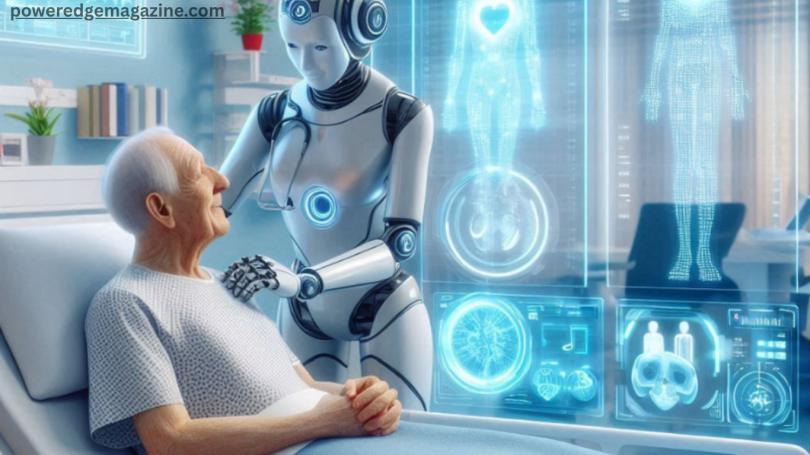
Healthcare is one of the most critical areas benefiting from AI innovation. Traditionally, medical decisions relied heavily on human expertise, experience, and manual data analysis. Today, AI systems can process massive amounts of medical data in seconds, helping doctors make faster and more accurate decisions.
Early Disease Detection and Diagnosis
One of the most impactful uses of AI in healthcare is early diagnosis. Machine learning models can analyze medical images such as X-rays, MRIs, and CT scans to detect diseases like:
- Cancer (especially breast, lung, and skin cancer)
- Heart conditions
- Neurological disorders like Alzheimer’s
AI systems often detect patterns that are too subtle for the human eye, allowing earlier intervention and significantly improving survival rates.
Personalized Medicine
AI is making it possible to move away from “one-size-fits-all” treatment approaches. By analyzing genetic data, lifestyle factors, and medical history, AI can help doctors design personalized treatment plans tailored to each patient.
This approach is especially powerful in:
- Oncology (cancer treatment)
- Rare genetic diseases
- Chronic conditions like diabetes
Drug Discovery and Development
Traditionally, developing new drugs can take years or even decades. AI is dramatically speeding up this process by:
- Simulating how molecules interact
- Predicting which compounds are most effective
- Reducing costly trial-and-error in labs
Pharmaceutical companies are now using AI to identify potential drug candidates in months instead of years.
Virtual Health Assistants and Telemedicine
AI-powered chatbots and virtual assistants are improving patient access to healthcare. These systems can:
- Answer medical questions
- Schedule appointments
- Provide basic diagnosis suggestions
- Monitor chronic conditions remotely
During and after the COVID-19 pandemic, telemedicine combined with AI tools has become increasingly important for remote healthcare delivery.
Challenges in Healthcare AI
Despite its benefits, AI in healthcare faces challenges such as:
- Data privacy concerns
- Risk of misdiagnosis
- High implementation costs
- Regulatory approval issues
However, ongoing improvements in transparency and medical validation are helping address these concerns.
AI in Finance: Smarter, Faster, and More Secure Systems
The finance industry has always relied heavily on data, making it an ideal environment for AI applications. Today, AI is transforming everything from banking operations to investment strategies.
Fraud Detection and Cybersecurity
One of AI’s most valuable roles in finance is detecting fraud. Machine learning algorithms analyze transaction patterns in real time to identify suspicious activities such as:
- Unusual spending behavior
- Unauthorized access attempts
- Identity theft
Banks and payment platforms use AI to block fraudulent transactions instantly, often before customers even notice.
Algorithmic Trading
AI-driven trading systems analyze massive volumes of market data at high speed to make investment decisions. These systems:
- Identify market trends
- Predict stock price movements
- Execute trades automatically
This has led to the rise of high-frequency trading, where decisions are made in fractions of a second.
Credit Scoring and Loan Approval
Traditional credit scoring models rely on limited financial history. AI expands this by analyzing additional factors such as:
- Spending behavior
- Employment history
- Online financial activity
This helps financial institutions make more accurate lending decisions and potentially expand credit access to underserved populations.
Customer Service and Chatbots
AI-powered chatbots are now widely used in banking apps and websites. They help users:
- Check account balances
- Transfer funds
- Report lost cards
- Resolve common issues
This reduces operational costs while improving customer satisfaction.
Risk Management and Market Forecasting
AI systems can analyze global economic indicators, political events, and historical data to predict financial risks. This helps institutions prepare for:
- Market crashes
- Currency fluctuations
- Investment risks
Challenges in Finance AI
Despite its advantages, AI in finance raises concerns such as:
- Algorithmic bias in lending decisions
- Lack of transparency in trading models
- Cybersecurity vulnerabilities
- Regulatory compliance issues
AI in Education: Personalized Learning for a Digital Future
Education is undergoing a major transformation as AI introduces new ways of teaching, learning, and assessment. Instead of traditional classroom-only models, learning is becoming more adaptive and student-centered.
Personalized Learning Systems
AI-powered platforms can analyze how students learn and adapt lessons accordingly. This means:
- Faster learners receive advanced material
- Struggling students get additional support
- Learning paths are customized for each individual
This helps improve overall academic performance and engagement.
Intelligent Tutoring Systems
AI tutors provide students with real-time assistance outside the classroom. These systems can:
- Explain complex concepts step by step
- Provide instant feedback
- Identify learning gaps
They act like 24/7 digital teachers available anytime.
Automated Grading and Assessment
Teachers often spend significant time grading assignments and exams. AI can automate this process for:
- Multiple-choice tests
- Short written responses
- Even essays using natural language processing
This allows educators to focus more on teaching rather than administrative tasks.
Language Learning and Translation
AI-powered language tools help students learn new languages through:
- Speech recognition
- Real-time translation
- Pronunciation correction
This makes global education more accessible than ever.
Virtual Classrooms and Smart Content
AI is also improving online education platforms by creating:
- Interactive learning experiences
- Adaptive quizzes
- Smart recommendations for study materials
Virtual classrooms now closely mimic in-person learning experiences.
Challenges in Education AI
Some key concerns include:
- Over-reliance on technology
- Reduced human interaction
- Data privacy for students
- Unequal access to digital tools
Balancing technology with traditional teaching remains essential.
Cross-Sector Impact: What Healthcare, Finance, and Education Have in Common
Although these three sectors are different, AI connects them in powerful ways:
- All rely on large-scale data analysis
- All benefit from automation and predictive modeling
- All face ethical concerns around privacy and fairness
- All are shifting toward personalized services
AI acts as a universal technology layer improving efficiency, accuracy, and accessibility across industries.
The Future of AI in These Sectors
Looking ahead, AI is expected to become even more integrated into daily life. Some future trends include:
- Fully AI-assisted hospitals with predictive diagnostics
- Autonomous financial systems managing portfolios in real time
- Fully personalized education systems for every student worldwide
- Greater collaboration between humans and AI systems
However, this future also depends heavily on responsible AI development, ethical frameworks, and strong regulations.
Frequently Asked Question
How is AI improving healthcare today?
AI improves healthcare by assisting in disease diagnosis, personalizing treatment plans, accelerating drug discovery, and enabling remote patient monitoring.
Can AI replace doctors or teachers?
No, AI is designed to assist professionals, not replace them. Human judgment, empathy, and experience remain essential.
How does AI detect fraud in banking?
AI analyzes transaction patterns in real time and flags unusual or suspicious behavior that may indicate fraud.
What are the risks of AI in finance?
Risks include algorithmic bias, lack of transparency, cybersecurity threats, and regulatory challenges.
How does AI personalize education?
AI tracks student performance and adapts lessons, quizzes, and learning materials to match individual needs.
Is student data safe in AI-based learning systems?
Most systems use encryption and security protocols, but data privacy remains a major concern that requires strict regulation.
What is the future of AI in these industries?
AI is expected to become more advanced, offering fully personalized healthcare, automated financial systems, and adaptive global education platforms.
Conclusion
AI is no longer just an emerging technology—it is a foundational force transforming healthcare, finance, and education. In healthcare, it saves lives through faster diagnoses and personalized treatments. In finance, it enhances security, efficiency, and decision-making. In education, it creates adaptive, student-focused learning environments. While the benefits are significant, challenges such as privacy, bias, and regulation must be addressed carefully. The future will likely be defined not by AI replacing humans, but by AI empowering humans to make better decisions and achieve greater outcomes.