
Cloud computing has transformed the way organizations operate by providing scalable infrastructure, flexible collaboration, and cost-effective access to digital resources. Businesses of all sizes now rely on cloud platforms to store data, run applications, support remote teams, and deliver services to customers around the world. While cloud technology offers significant advantages, it also introduces new security challenges that organizations must address. As cyber threats become more sophisticated and regulatory requirements continue to evolve, cloud security has become a critical component of modern business strategy.
Protecting cloud environments is no longer just the responsibility of IT departments. Executives, employees, developers, and security teams all play an important role in safeguarding digital assets and maintaining business continuity.
What Is Cloud Security?
Cloud security refers to the policies, technologies, controls, and best practices used to protect cloud-based systems, applications, data, and infrastructure.
Its purpose is to ensure the confidentiality, integrity, and availability of digital resources while preventing unauthorized access, data breaches, malware infections, and service disruptions.
Cloud security applies to public, private, and hybrid cloud environments.
Why Cloud Security Matters
Organizations increasingly move critical business operations to the cloud because of its flexibility and efficiency.
However, sensitive customer information, financial records, intellectual property, and operational systems become attractive targets for cybercriminals if not properly protected.
Common Cloud Security Threats
Understanding potential threats helps organizations build stronger security strategies.
Data Breaches
Unauthorized access to cloud data remains one of the most significant security risks.
Weak passwords, misconfigured storage, and compromised user accounts can expose sensitive information.
Misconfigured Cloud Services
Improper security settings are among the most common causes of cloud security incidents.
Incorrect permissions, publicly accessible storage, and insecure configurations may unintentionally expose valuable data.
Insider Threats
Employees, contractors, or partners with excessive access permissions can accidentally or intentionally compromise cloud resources.
Proper access management helps reduce this risk.
Malware and Ransomware
Attackers may attempt to infect cloud-connected systems with malicious software that steals information or encrypts business data.
Strong endpoint security and regular backups provide important protection.
Account Hijacking
Compromised usernames and passwords allow attackers to gain unauthorized access to cloud services.
Multi-factor authentication greatly reduces this risk.
Distributed Denial-of-Service (DDoS) Attacks
Large volumes of malicious traffic can disrupt cloud-hosted applications and services, affecting availability and customer experience.
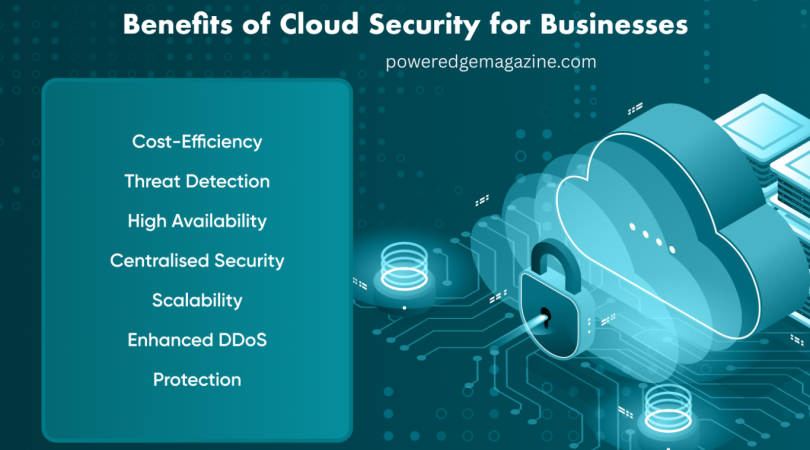
Benefits of Strong Cloud Security
Effective cloud security provides long-term business advantages.
Protects Sensitive Data
Security controls help safeguard customer records, financial information, intellectual property, and operational data.
Improves Regulatory Compliance
Organizations can better meet industry regulations and privacy requirements through secure cloud practices.
Supports Business Continuity
Reliable backup strategies, disaster recovery plans, and resilient cloud infrastructure reduce downtime during unexpected events.
Enhances Customer Confidence
Customers are more likely to trust organizations that demonstrate strong data protection practices.
Enables Secure Innovation
Businesses can adopt new cloud technologies with greater confidence when strong security controls are already in place.
Essential Cloud Security Best Practices
Organizations should combine technology with well-defined security processes.
Implement Strong Identity and Access Management
Grant users only the permissions necessary to perform their responsibilities.
Review access privileges regularly and remove unnecessary accounts promptly.
Enable Multi-Factor Authentication
Adding an additional verification step significantly reduces the risk of unauthorized account access.
Encrypt Sensitive Data
Encryption protects information both during transmission and while stored in cloud environments.
Even if unauthorized access occurs, encrypted data is much more difficult to exploit.
Monitor Cloud Activity
Continuous monitoring helps detect suspicious behavior, unusual login attempts, and potential security incidents before they escalate.
Perform Regular Security Updates
Cloud applications, operating systems, and connected services should be updated consistently to address known vulnerabilities.
Maintain Reliable Backups
Frequent backups help organizations recover quickly from accidental deletion, ransomware attacks, or system failures.
The Shared Responsibility Model
Cloud security is a shared responsibility between the cloud service provider and the customer.
Generally:
- The provider secures the underlying cloud infrastructure.
- Customers are responsible for protecting their applications, user accounts, data, and security configurations.
Understanding this shared model helps organizations avoid dangerous security gaps.
Cloud Security for Remote Work
Remote and hybrid work environments rely heavily on cloud services for collaboration and productivity.
Organizations should:
- Require secure authentication.
- Use encrypted communication.
- Secure employee devices.
- Apply endpoint protection.
- Train employees to recognize phishing attempts.
- Monitor remote access continuously.
These practices strengthen security while supporting workforce flexibility.
Emerging Trends in Cloud Security
Cloud security continues to evolve alongside technology.
Artificial Intelligence
AI-powered security tools help identify unusual behavior, automate threat detection, and improve incident response.
Zero Trust Security
Zero Trust assumes that no user or device should automatically be trusted.
Every access request is continuously verified before permissions are granted.
Cloud-Native Security
Organizations increasingly build security directly into cloud applications during development rather than adding protections later.
Security Automation
Automation reduces response times by handling repetitive monitoring, alerting, and remediation tasks.
Multi-Cloud Protection
Many enterprises now use multiple cloud providers, making centralized security management increasingly important.
Building a Cloud Security Strategy
An effective cloud security strategy should include:
- Risk assessments
- Security governance
- Identity management
- Data encryption
- Continuous monitoring
- Employee security training
- Incident response planning
- Compliance management
- Regular security testing
Combining these elements helps organizations build resilient cloud environments.
Frequently Asked Questions
What is cloud security?
Cloud security is the collection of technologies, policies, and best practices used to protect cloud infrastructure, applications, and data from cyber threats.
Why is cloud security important?
It protects sensitive information, prevents cyberattacks, supports regulatory compliance, and ensures reliable business operations.
What is the biggest cloud security risk?
Misconfigured cloud resources and compromised user credentials are among the most common causes of cloud security incidents.
How can businesses improve cloud security?
Organizations should implement strong access controls, enable multi-factor authentication, encrypt data, monitor cloud activity, update systems regularly, and educate employees about cybersecurity.
Is cloud security only the provider’s responsibility?
No. Cloud security follows a shared responsibility model in which providers secure the infrastructure while customers protect their own data, accounts, applications, and configurations.
Conclusion
Cloud computing has become the foundation of modern digital business, making cloud security more important than ever. As organizations continue adopting cloud services for innovation, collaboration, and growth, they must also strengthen their defenses against evolving cyber threats. By combining strong identity management, encryption, continuous monitoring, employee education, and proactive security planning, enterprises can protect valuable data while confidently embracing digital transformation. Investing in cloud security not only reduces risk but also supports long-term business resilience, customer trust, and sustainable growth.