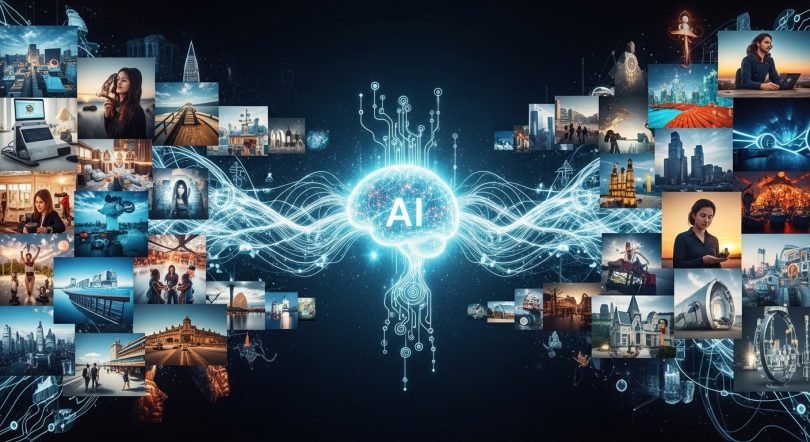

Artificial Intelligence (AI) is rapidly transforming modern industries and daily life by enabling machines to learn, analyze, and make decisions with minimal human intervention. From healthcare and finance to education, transportation, and entertainment, AI is improving efficiency, accuracy, and personalization. In everyday life, it powers smart assistants, recommendations, and automation, while in business it drives innovation, productivity, and smarter decision-making across global markets.
AI in Business and Industry Transformation
Automation of Repetitive Tasks
AI is replacing repetitive manual tasks in industries such as manufacturing, logistics, and administration. This improves speed, reduces human error, and lowers operational costs. Businesses can focus more on strategic work while AI handles routine processes efficiently and consistently.
Data Driven Decision Making
AI systems analyze large amounts of data to help companies make smarter decisions. They identify patterns, trends, and insights that humans may miss. This improves forecasting, reduces risks, and enhances business performance across competitive global markets and industries.
Predictive Business Analytics
Predictive analytics uses AI to forecast future outcomes based on historical data. Companies use it for demand forecasting, customer behavior analysis, and risk management. This allows businesses to plan better strategies and stay ahead in rapidly changing markets.
AI in Supply Chain Management
AI optimizes supply chains by improving inventory tracking, demand prediction, and logistics planning. It reduces delays, minimizes waste, and increases efficiency. Companies benefit from smoother operations and better coordination between suppliers, manufacturers, and customers worldwide.
Intelligent Business Systems
Intelligent systems combine AI with automation to manage complex business operations. These systems improve productivity, reduce costs, and enhance decision-making. They are widely used in industries such as finance, retail, and manufacturing for operational excellence.
AI in Healthcare Revolution
AI Medical Diagnosis
AI helps doctors diagnose diseases more accurately by analyzing medical images and patient data. It detects patterns that may be difficult for humans to identify, improving early diagnosis and increasing treatment success rates in modern healthcare systems.
Personalized Treatment Plans
AI enables personalized healthcare by analyzing patient history and genetic data. It helps doctors design treatment plans tailored to individual needs. This improves recovery rates and reduces side effects, making healthcare more effective and patient-centered.
Medical Imaging Analysis
AI enhances medical imaging technologies such as MRI and CT scans. It identifies abnormalities quickly and accurately, supporting doctors in making better decisions. This reduces diagnosis time and improves overall healthcare efficiency in hospitals and clinics.
Drug Discovery Acceleration
AI speeds up the process of discovering new medicines by analyzing chemical data and predicting drug effectiveness. This reduces research time and costs, helping pharmaceutical companies bring life-saving treatments to market faster.
Virtual Health Assistants
AI-powered virtual assistants help patients with medical queries, appointment scheduling, and health monitoring. They improve accessibility to healthcare services and provide quick support, especially in remote or underserved areas.
AI in Education and Learning
Personalized Learning Systems
AI adapts educational content based on student performance and learning style. It provides customized lessons to improve understanding and retention. This makes learning more effective and student-focused in modern education systems.
Smart Tutoring Platforms
AI-powered tutoring systems provide real-time feedback and guidance to students. They help identify weaknesses and suggest improvements, making education more interactive and accessible for learners worldwide.
Automated Grading Systems
AI automates the grading of assignments and exams, saving time for teachers. It ensures fairness and consistency while allowing educators to focus more on teaching and student engagement.
Virtual Classrooms
AI supports virtual classrooms with interactive tools, real-time translation, and engagement tracking. This enables seamless remote learning experiences and improves global access to education.
Skill Development Platforms
AI recommends courses and learning paths based on user interests and career goals. This helps individuals develop relevant skills and improve job opportunities in competitive markets.
AI in Transportation and Mobility
Autonomous Vehicles
AI powers self-driving cars that can navigate roads without human input. These vehicles improve road safety, reduce accidents, and transform the future of transportation systems worldwide.
Smart Traffic Management
AI analyzes traffic data to optimize signals and reduce congestion. This improves travel time, fuel efficiency, and urban mobility in modern cities.
Ride Sharing Optimization
AI enhances ride-sharing platforms by matching drivers and passengers efficiently. It reduces waiting time and improves route planning, making transportation more convenient and cost-effective.
Predictive Maintenance Systems
AI predicts vehicle maintenance needs before breakdowns occur. This reduces repair costs, improves safety, and ensures smooth operation of transportation fleets and public transit systems.
Logistics and Delivery Automation
AI improves delivery systems by optimizing routes and managing fleets. This reduces delays and enhances efficiency in e-commerce and logistics industries globally.
AI in Finance and Banking
Fraud Detection Systems
AI detects suspicious transactions and prevents financial fraud in real time. It analyzes patterns and alerts banks to unusual activities, improving security in digital banking systems.
Algorithmic Trading
AI enables automated trading in financial markets by analyzing data and executing trades at high speed. This improves accuracy and maximizes investment returns for traders and institutions.
Credit Risk Analysis
AI evaluates creditworthiness by analyzing financial behavior and transaction history. This helps banks make better lending decisions and reduce financial risks.
Chatbots in Banking
AI chatbots provide customer support for banking services such as account inquiries and transactions. They improve response time and enhance customer satisfaction.
Personal Finance Management
AI-powered apps help users manage budgets, track expenses, and plan savings. This improves financial awareness and supports better money management in daily life.
AI in Daily Life Applications
Smart Assistants Usage
AI assistants like voice-controlled systems help users perform tasks such as setting reminders, searching information, and controlling devices. They simplify daily routines and improve productivity.
Recommendation Systems
AI recommends movies, products, and content based on user preferences. This enhances user experience on platforms like streaming services and e-commerce websites.
Smart Home Automation
AI controls smart home devices such as lighting, security, and appliances. It improves comfort, energy efficiency, and convenience in modern households.
Language Translation Tools
AI-powered translation tools help people communicate across different languages instantly. This improves global communication and cultural exchange in both personal and professional settings.
Health and Fitness Apps
AI tracks fitness activities, diet, and health metrics through mobile apps and wearables. It helps users maintain healthier lifestyles through personalized recommendations.
AI in Cybersecurity Protection
Threat Detection Systems
AI identifies cyber threats in real time by analyzing network activity. It helps prevent hacking attempts and protects sensitive digital information.
Behavioral Security Analysis
AI studies user behavior to detect unusual activities. This helps identify potential security breaches before they cause damage.
Automated Response Systems
AI automatically responds to cyber threats by isolating affected systems and reducing damage. This improves response time and security efficiency.
Encryption Enhancement
AI strengthens encryption methods to protect data from unauthorized access. It ensures secure communication and data protection across digital platforms.
Fraud Prevention Tools
AI detects fraudulent activities in online systems such as banking and e-commerce. It improves trust and safety in digital transactions.
Future Impact of AI Technology
Human AI Collaboration
AI will work alongside humans to improve productivity and decision-making. This collaboration will enhance creativity and efficiency in various industries.
Advanced Automation Systems
Future AI systems will automate complex tasks across industries, reducing human workload and increasing operational efficiency.
Ethical AI Development
Ethical AI focuses on fairness, transparency, and accountability. It ensures responsible use of AI technologies in society.
AI in Smart Cities
AI will improve urban management through smart traffic systems, energy optimization, and public services. This will create more efficient cities.
Global Economic Transformation
AI will reshape global economies by creating new industries, jobs, and business models. It will drive innovation and economic growth worldwide.
What is artificial intelligence
Artificial intelligence is technology that enables machines to think and learn like humans.
How AI is used in daily life
AI is used in assistants, apps, recommendations, and smart devices.
Why AI is important for business
AI is important because it improves efficiency, automation, and decision-making.
Can AI replace humans
AI can automate tasks but cannot fully replace human creativity and emotions.
What industries use AI
AI is used in healthcare, finance, education, transportation, and retail.
Conclusion
Artificial intelligence is transforming modern industries and daily life by improving efficiency, automation, and decision-making across all sectors. From healthcare and finance to education and transportation, AI is driving innovation and creating smarter systems. In everyday life, it enhances convenience and personalization. As AI continues to evolve, it will play an even greater role in shaping a more advanced, connected, and intelligent future for humanity worldwide.