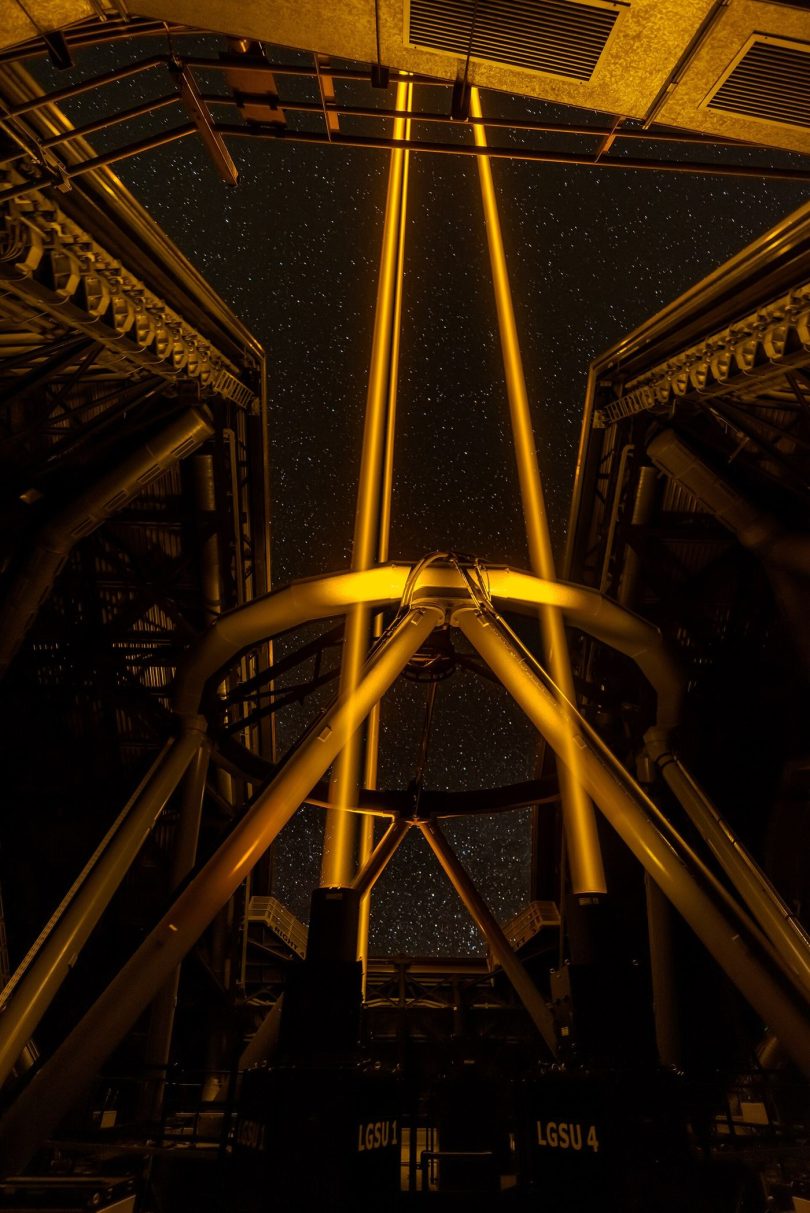

Telescopes on high, dry mountain sites spend clear nights collecting light that has travelled for billions of years, and modern survey programmes are using that light to map galaxies far fainter than earlier catalogues could record. Astronomers are interested in those distant systems because they show the universe at an earlier stage, when stars were forming rapidly and galaxies were still assembling. Each deep image contains thousands of objects, from nearby stars in our own galaxy to remote smudges whose light began its journey long before Earth existed. Turning those images into reliable maps requires careful calibration, repeated observations and software that can separate real galaxies from noise and artefacts. Because the faintest galaxies are so dim, astronomers stack many exposures of the same field and return to it over several seasons, gradually building images deep enough to reveal objects that a single night of observing could never show clearly.
What the Evidence Shows
The value of a large survey is that it allows fair comparisons, rather than conclusions drawn from a handful of unusual objects. With bigger samples, researchers can study how galaxy shapes, colours and clustering change over cosmic time, and test whether their models of dark matter and star formation still fit. The catalogues are also shared widely, so other teams can search the same data for rare lenses, distant clusters or changing objects that were not the original target. For the public, the appeal is simpler, in that a single dark patch of sky, observed patiently, turns out to be crowded with entire stellar cities. Those deep fields become reference points for the whole field, used to calibrate newer instruments and to train analysis software, and they remind researchers that progress in astronomy often comes from patient accumulation rather than a single dramatic discovery announcement. Reporting and analysis from sources such as NASA track the same developments, and specialists following faint galaxy surveys say the direction is now consistent across independent lines of evidence.
The Wider Context
Funding bodies are watching faint galaxy surveys closely because the work sits at the junction of basic curiosity and practical return. Grant panels increasingly ask for a path from discovery to application, while researchers push back that the most valuable uses of fundamental science are rarely the ones written into the original proposal. The tension is productive when both sides stay honest about timescales.
What Happens Next
The long view on faint galaxy surveys is that fields advance by accumulation rather than by single announcements. This result adds a solid, checkable piece to a structure many teams are building, and its authors have shared their data so the piece can be tested from every side. That is how the picture eventually becomes reliable enough to act on. You can follow related developments in our coverage of science.
It is also worth remembering how quickly the picture in this area has changed before. Positions that looked settled a few years ago have been revised as new data arrived, and the same humility is appropriate now. The strongest coverage of this subject, and the most useful advice, tends to come from sources that update their views openly when the facts move, rather than defending an earlier position long after it has stopped fitting the evidence available.