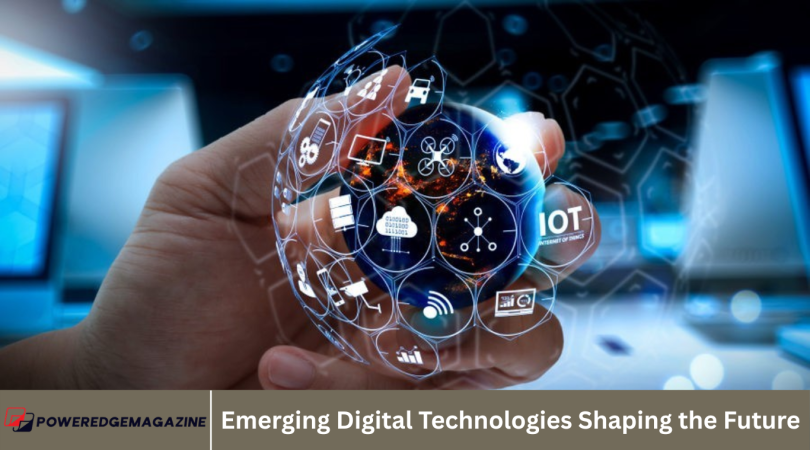

Digital technology is developing faster than ever, changing how people live, work, communicate, travel, shop, and access services. New technologies are moving from research laboratories into businesses, homes, schools, hospitals, factories, and public services.
Artificial intelligence, robotics, quantum computing, blockchain, the Internet of Things, advanced networks, automation, and immersive technologies are among the developments that could have a major influence on the future. Some are already widely used, while others are still developing. Together, these technologies could create new opportunities and change how many industries operate.
Why Emerging Technologies Matter
Emerging technologies can solve problems that were difficult or expensive to address in the past.
Businesses are using advanced digital systems to process information faster, automate repetitive activities, improve customer experiences, and develop new products.
Consumers are also gaining access to smarter devices and services.
The impact of these technologies may become even greater as they mature and become more affordable.
Artificial Intelligence
Artificial intelligence is one of the most influential technologies shaping the future.
AI systems can analyze information, recognize patterns, understand language, generate content, and support decision-making.
Businesses are already using AI for customer service, marketing, software development, research, data analysis, and automation.
As AI becomes more capable, its applications are likely to expand into additional areas.
Generative AI
Generative AI can create text, images, audio, video, software code, and other digital content.
It is changing how people approach creative and professional tasks.
Businesses can use generative AI to assist employees with research, communication, marketing, product development, and other activities.
Human review will remain important because AI systems can produce inaccurate or misleading information.
AI Agents
AI agents are designed to perform multiple tasks with greater independence.
Instead of simply answering a question, an AI agent may be able to plan steps, use digital tools, process information, and complete certain workflows.
This could change how businesses automate complex tasks.
However, security, reliability, and human oversight will be important as these systems become more capable.
Robotics
Robotics is another technology with significant future potential.
Modern robots are becoming more capable because of improvements in AI, sensors, computer vision, and machine learning.
Robots can already operate in factories, warehouses, hospitals, research environments, and other locations.
Future robots may perform a wider range of tasks and work more closely with humans.
Humanoid Robots
Humanoid robots are designed to operate in environments created for people.
They may eventually be used for logistics, manufacturing, customer service, healthcare support, and other applications.
The technology is still developing, but improvements in AI and robotics could make humanoid systems increasingly practical.
Quantum Computing
Quantum computing represents a different approach to information processing.
Quantum computers use principles of quantum mechanics to perform certain types of calculations in ways that differ from traditional computers.
The technology could eventually support advances in areas such as scientific research, materials development, optimization, and cryptography.
However, large-scale practical quantum computing remains a developing field.
Quantum-Safe Security
The development of quantum computers also creates security concerns.
Some existing encryption methods could eventually be challenged by powerful quantum systems.
This is encouraging organizations to explore post-quantum cryptography designed to protect information against future quantum-based attacks.
Internet of Things
The Internet of Things connects physical devices to digital networks.
Smart sensors, vehicles, appliances, industrial equipment, and other devices can collect and exchange information.
Businesses can use this information to monitor operations and improve efficiency.
Consumers can use connected devices for convenience, security, and energy management.
Smart Homes
Smart home technology is becoming increasingly common.
Connected lights, security cameras, thermostats, appliances, and entertainment systems can communicate through digital networks.
AI may make smart homes more useful by allowing systems to learn routines and automate certain activities.
Smart Cities
Cities can use connected technologies to improve public services.
Sensors can monitor traffic, energy consumption, waste management, air quality, and infrastructure.
Data can help city authorities make better decisions.
Smart city systems may improve efficiency while supporting more sustainable urban development.
Advanced Connectivity
Faster and more reliable communication networks are essential for many emerging technologies.
Advanced mobile networks can support connected vehicles, industrial automation, smart cities, remote services, and immersive applications.
Better connectivity allows devices and systems to exchange information more quickly.
5G and Beyond
Fifth-generation mobile networks have already improved connectivity in many regions.
Future network technologies may offer even greater speed, lower latency, and support for huge numbers of connected devices.
These improvements could create new possibilities for businesses and consumers.
Edge Computing
Edge computing processes data closer to where it is generated.
Instead of sending all information to a distant data center, some processing can happen near devices and sensors.
This can reduce delays and improve performance.
Edge computing may become increasingly important for autonomous vehicles, industrial systems, healthcare devices, and smart cities.
Cloud Computing
Cloud computing will continue to support digital transformation.
Businesses can use cloud platforms for applications, storage, databases, artificial intelligence, and collaboration.
Cloud services allow organizations to access computing resources without building all infrastructure themselves.
The future may involve closer integration between cloud systems and edge computing.
Blockchain
Blockchain technology provides a way to maintain shared digital records across distributed networks.
It has applications in areas such as financial services, supply chains, digital identity, and asset management.
Businesses are continuing to explore where blockchain can provide practical benefits.
Digital Identity
Digital identity technology can help people securely verify who they are online.
It may be used for banking, government services, healthcare, education, and other digital platforms.
Future identity systems may combine strong authentication with privacy-focused technologies.
Digital Currencies
Digital payment systems are developing rapidly.
Central banks, financial institutions, technology companies, and payment providers are exploring different forms of digital money.
The future of digital currencies will depend on technology, regulation, consumer adoption, and financial policies.
Augmented Reality
Augmented reality places digital information over the physical world.
AR can be used for shopping, education, navigation, training, entertainment, and industrial applications.
For example, customers may be able to visualize products in their homes before purchasing them.
Virtual Reality
Virtual reality creates immersive digital environments.
VR is already used for gaming and entertainment, but it can also support education, training, design, healthcare, and professional simulations.
Improved hardware could make virtual experiences more comfortable and accessible.
Mixed Reality
Mixed reality combines physical and digital environments.
Users can interact with digital objects while remaining aware of their physical surroundings.
This technology could have applications in engineering, design, education, healthcare, and collaboration.
Digital Twins
A digital twin is a virtual representation of a physical object, system, or process.
Companies can use digital twins to monitor equipment, simulate changes, and predict possible problems.
Manufacturers, construction companies, transportation organizations, and energy providers can benefit from this technology.
Autonomous Vehicles
Self-driving technology is another area of emerging digital innovation.
Autonomous systems use cameras, sensors, maps, AI, and other technologies to understand their surroundings.
Fully autonomous transportation remains challenging, but advanced driver assistance systems are already becoming more common.
Drones
Drones are being used for photography, agriculture, inspection, mapping, delivery experiments, and emergency response.
Future drone systems may become more autonomous.
Businesses could use drones to inspect infrastructure, monitor crops, and perform tasks that are difficult or dangerous for humans.
Biotechnology and Digital Technology
Digital technology is increasingly connected with biotechnology.
AI and advanced computing can help researchers analyze biological information and identify patterns.
This combination could support research into medicines, diagnostics, agriculture, and other scientific areas.
Digital Healthcare
Healthcare is becoming increasingly digital.
Telehealth platforms, wearable devices, remote monitoring, electronic records, and AI-assisted tools can improve access to information and services.
Future healthcare systems may use more connected technologies to monitor patients and support medical professionals.
Wearable Technology
Wearable devices can collect information about movement, activity, sleep, and other measurements.
Future wearables may become smaller, more accurate, and more capable.
They could play a greater role in personal wellness, fitness, communication, and healthcare.
Brain-Computer Interfaces
Brain-computer interfaces aim to create communication pathways between the brain and digital systems.
Research in this area could eventually support medical applications and new forms of human-computer interaction.
The technology is still developing and raises important questions about safety, privacy, and ethics.
Advanced Cybersecurity
As technology becomes more connected, cybersecurity will become even more important.
Future security systems may use AI to detect unusual behavior and respond to threats more quickly.
Businesses will need to protect increasingly complex digital environments.
AI-Powered Cybersecurity
AI can help security teams analyze large amounts of network activity.
It can identify suspicious patterns and potentially detect threats earlier.
However, attackers can also use AI, making cybersecurity an ongoing technological competition.
Sustainable Technology
Emerging digital technologies may also support environmental goals.
Smart energy systems, connected sensors, AI optimization, and advanced materials can help organizations use resources more efficiently.
Technology can contribute to reducing waste and improving energy management.
Renewable Energy Technology
Solar, wind, battery storage, and other renewable technologies are continuing to develop.
Digital systems can help manage renewable energy production and distribution.
Smart grids may become increasingly important as energy systems become more decentralized.
Advanced Battery Technology
Better batteries could influence transportation, energy storage, and consumer electronics.
Researchers are exploring technologies designed to improve energy density, charging speed, safety, and durability.
Advances in battery systems could support wider adoption of electric transportation and renewable energy storage.
3D Printing
3D printing allows physical objects to be created layer by layer from digital designs.
It is already used in manufacturing, healthcare, construction, engineering, and product development.
Future improvements could make 3D printing more affordable and useful for customized production.
Smart Manufacturing
Manufacturing is becoming increasingly digital.
Factories can combine robotics, AI, sensors, cloud computing, and analytics to monitor production.
Smart manufacturing systems can identify problems and optimize processes.
This can improve efficiency and reduce unnecessary waste.
Automation
Automation will continue to influence many industries.
Software and machines can perform repetitive tasks while employees focus on more complex responsibilities.
Future automation may involve increasingly intelligent systems capable of adapting to changing conditions.
Digital Education
Education is also being transformed by technology.
Online learning platforms, AI tutors, virtual classrooms, and interactive tools can provide students with flexible learning options.
Technology may also support personalized learning based on individual progress.
Future of Digital Entertainment
Entertainment is becoming increasingly interactive.
Streaming, gaming, virtual reality, AI-generated content, and immersive experiences are creating new ways for audiences to consume media.
The boundaries between traditional entertainment and digital experiences may continue to disappear.
The Impact on Businesses
Emerging technologies can help businesses improve productivity and create new revenue opportunities.
Companies may use AI to automate work, IoT to monitor operations, cloud platforms to scale services, and data analytics to make better decisions.
Businesses that experiment responsibly with emerging technology may identify new opportunities before competitors.
Impact on Jobs
Emerging technologies will change the workforce.
Some repetitive tasks may become automated, while new roles will emerge in AI, robotics, cybersecurity, software, data science, and other fields.
Workers will increasingly need to develop digital skills and adapt to changing technologies.
The Need for Digital Skills
Technology adoption requires people who understand how to use it.
Education and professional training will play an important role in preparing workers for future jobs.
Skills such as critical thinking, creativity, communication, data analysis, and technology literacy are likely to remain valuable.
Privacy and Security Concerns
Emerging technologies often involve collecting large amounts of information.
Connected devices, AI systems, digital identities, and online platforms can create privacy concerns.
Businesses and governments will need strong safeguards to protect personal information.
Ethical Considerations
Technology can create important ethical questions.
AI decision-making, facial recognition, automated systems, digital surveillance, and genetic technologies can affect individuals and society.
Responsible development requires attention to fairness, transparency, safety, privacy, and accountability.
Challenges of Emerging Technologies
Not every emerging technology will become mainstream.
Some technologies may be too expensive, difficult to scale, or unable to provide enough practical value.
Regulation and public acceptance can also influence adoption.
Businesses should evaluate technologies carefully before making major investments.
The Importance of Responsible Innovation
Innovation should focus on creating useful and safe solutions.
Companies need to consider the potential effects of new technologies on customers, employees, society, and the environment.
Responsible innovation can help build trust and support sustainable adoption.
What the Future May Look Like
The future will likely involve multiple technologies working together.
AI could manage connected devices, robotics could use advanced AI, quantum computing could support scientific research, and cloud and edge systems could process massive amounts of information.
This technological convergence may create solutions that are difficult to imagine today.
Frequently Asked Questions
What are emerging digital technologies?
Emerging digital technologies are new or rapidly developing technologies that have the potential to significantly change industries, businesses, and everyday life.
Which emerging technology could have the biggest impact?
Artificial intelligence is currently one of the most influential emerging technologies, but robotics, quantum computing, IoT, advanced networks, and other technologies could also have major long-term effects.
How will emerging technologies affect jobs?
They may automate some repetitive tasks while creating new roles that require skills in AI, software, cybersecurity, data analysis, robotics, and other technology-related areas.
Are emerging digital technologies safe?
Their safety depends on how they are designed, implemented, regulated, and used. Cybersecurity, privacy, testing, and responsible development are important for reducing risks.
What is the future of digital technology?
The future is likely to involve greater integration of AI, automation, connected devices, advanced computing, cloud services, robotics, and immersive technologies across everyday life and business.
Conclusion
Emerging digital technologies are likely to play a major role in shaping the future of business and society. Artificial intelligence, robotics, quantum computing, the Internet of Things, advanced connectivity, cloud computing, blockchain, immersive technologies, automation, and digital healthcare are already changing how people and organizations operate. Some technologies are mature, while others are still in development, but their combined potential is significant. The future will also require careful attention to cybersecurity, privacy, ethics, digital skills, and responsible innovation. As these technologies continue to develop, businesses and individuals that remain adaptable and willing to learn may be better prepared for the opportunities and challenges ahead.