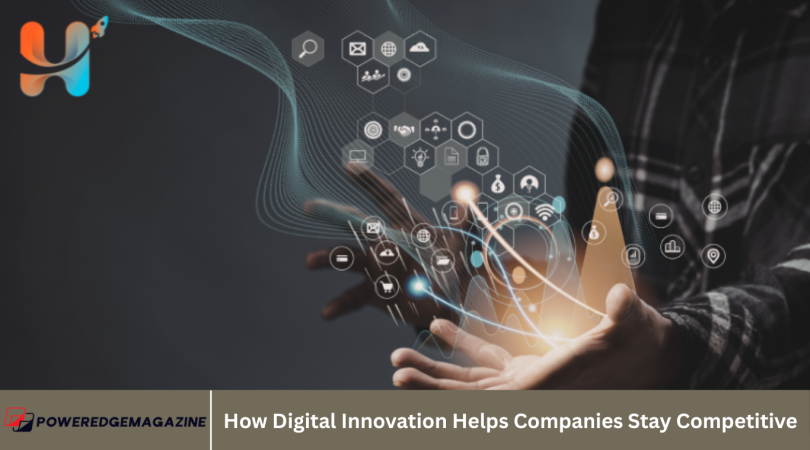

Digital innovation has become one of the most important factors influencing business competition. Companies in almost every industry are using technology to improve their operations, understand customers, develop better products, and respond quickly to market changes. Businesses that once relied mainly on traditional methods are now adopting artificial intelligence, automation, cloud computing, data analytics, and digital platforms.
Staying competitive today requires more than simply offering a good product. Customers expect convenience, speed, personalization, and reliable digital experiences. Digital innovation gives companies the tools to meet these expectations while improving internal efficiency. When used strategically, technology can help businesses reduce costs, discover new opportunities, and build stronger relationships with customers.
Why Digital Innovation Matters
Markets are changing faster than ever. New competitors can enter industries quickly, customer preferences can shift rapidly, and emerging technologies can change established business models.
Digital innovation helps companies respond to these changes. Businesses can use real-time information, automated processes, and digital communication to make faster decisions.
Companies that continuously improve their technology and processes may be better prepared to compete in changing markets.
Improving Operational Efficiency
One of the biggest advantages of digital innovation is improved efficiency.
Businesses can use software and automation to reduce repetitive tasks, organize workflows, manage inventory, and process information.
Employees can spend less time on manual work and more time on activities that require creativity, problem-solving, and human judgment.
Greater efficiency can also help businesses control operating costs.
Artificial Intelligence
Artificial intelligence is becoming an important competitive tool.
Companies use AI to analyze data, automate customer support, create content, forecast demand, detect unusual activity, and improve decision-making.
AI can process large amounts of information quickly and identify patterns that may not be immediately obvious to employees.
Businesses that use AI effectively can potentially respond faster to customers and market changes.
Generative AI
Generative AI is creating new opportunities for businesses.
Companies can use these systems to assist with writing, research, marketing content, software development, presentations, and customer communication.
Generative AI can help employees complete certain tasks more quickly.
However, businesses need to review AI-generated information and establish clear policies for accuracy, privacy, intellectual property, and security.
Data-Driven Decisions
Data has become an important competitive resource.
Companies collect information from customers, sales transactions, websites, applications, and internal operations.
Analytics tools can transform this information into useful insights.
Businesses can use data to understand customer preferences, identify trends, forecast demand, and measure performance.
Better information can lead to better decisions.
Predictive Analytics
Predictive analytics can help companies prepare for possible future outcomes.
Businesses can analyze historical information to estimate customer demand, identify potential risks, and improve inventory planning.
This can reduce uncertainty and help companies respond to changes before competitors.
Understanding Customers
Digital technology makes it easier for companies to understand their customers.
Businesses can analyze purchasing behavior, website activity, customer feedback, and engagement patterns.
These insights can help companies identify what customers want and where improvements are needed.
Understanding customers can provide a strong competitive advantage.
Personalized Experiences
Personalization is becoming an important part of digital competition.
Companies can use customer data to provide recommendations, targeted offers, customized content, and personalized communication.
Customers may be more likely to engage with a business when its services are relevant to their interests.
However, personalization should always be balanced with responsible data practices.
Better Customer Service
Digital innovation is changing customer service.
Chatbots, AI assistants, self-service portals, and automated communication can provide quick answers to common questions.
Human support teams can then focus on complex issues that require deeper attention.
A combination of digital tools and human assistance can create a stronger customer service experience.
Mobile Technology
Smartphones have changed how customers interact with businesses.
Consumers use mobile devices to search for products, compare prices, communicate with companies, make payments, and place orders.
Businesses need mobile-friendly websites and applications to remain accessible.
A smooth mobile experience can influence customer satisfaction and purchasing decisions.
E-Commerce
E-commerce allows companies to reach customers beyond physical locations.
Businesses can sell products and services through websites, applications, and online marketplaces.
Online stores can remain available around the clock and provide customers with convenient purchasing options.
Digital commerce also gives companies access to valuable information about customer behavior.
Digital Payments
Digital payments make transactions faster and more convenient.
Customers can use cards, mobile wallets, banking applications, and other electronic payment systems.
Businesses can benefit from quicker transactions and easier financial tracking.
Companies that provide convenient payment options may be better positioned to serve digitally focused consumers.
Cloud Computing
Cloud computing gives companies flexible access to technology infrastructure.
Businesses can use cloud systems for storage, software, communication, databases, and computing resources.
Cloud technology can support remote work and allow companies to scale their digital operations more easily.
It can also reduce the need to maintain large amounts of physical infrastructure.
Automation
Automation can help companies compete by improving speed and consistency.
Businesses can automate tasks such as data entry, invoice processing, scheduling, inventory updates, and certain marketing activities.
Automation reduces the time employees spend on repetitive processes.
This can allow businesses to focus more resources on innovation and customer needs.
Robotics
Robotics is particularly important in manufacturing, logistics, and warehouse operations.
Robots can perform repetitive tasks, move products, and support production processes.
Companies may use robotics to increase efficiency and maintain consistent quality.
As robotics technology improves, more industries may find practical applications for automated machines.
Digital Supply Chains
Efficient supply chains can provide an important competitive advantage.
Digital systems allow businesses to track products, manage inventory, monitor shipments, and forecast demand.
AI and analytics can help identify potential supply problems.
Better supply chain visibility allows companies to respond more quickly to disruptions.
Inventory Management
Digital inventory systems help businesses know what products they have available and where those products are located.
Accurate inventory information can reduce overstocking and shortages.
Automated systems can also update inventory information when purchases and shipments occur.
This can improve operational efficiency and customer satisfaction.
Cybersecurity
Strong cybersecurity is essential for competitive businesses.
Companies store valuable information about customers, employees, products, finances, and operations.
A security breach can cause financial losses and damage customer trust.
Businesses that invest in cybersecurity can better protect their digital operations and reputation.
Digital Marketing
Digital marketing allows companies to reach targeted audiences.
Businesses can use search engines, social media, email, websites, video content, and online advertising to promote products and services.
Digital marketing also provides detailed performance information.
Companies can use this information to adjust campaigns and improve results.
Social Media
Social media has become an important competitive channel.
Businesses can communicate directly with customers, promote products, respond to questions, and build communities.
Social platforms also allow companies to monitor trends and customer opinions.
Businesses that actively engage with their audiences can strengthen brand awareness.
Content Marketing
Useful content can help companies attract and retain customers.
Businesses can create guides, articles, videos, tutorials, and other resources that answer customer questions.
Content marketing can build credibility while improving online visibility.
It can also support long-term relationships with potential customers.
Digital Collaboration
Technology allows employees to work together regardless of location.
Cloud collaboration platforms, video meetings, messaging applications, and project management systems help teams coordinate their work.
This can make businesses more flexible.
Companies can also access talent from different locations through remote and hybrid work models.
Employee Productivity
Digital tools can improve employee productivity when they are implemented properly.
Automation reduces repetitive work, while collaboration systems make communication easier.
AI assistants can support research and organization.
However, employees need training to use these tools effectively.
Digital Skills
Technology changes quickly, which means employee skills must also develop.
Companies may need workers with knowledge of AI, data analysis, cybersecurity, cloud computing, software, and digital marketing.
Businesses that invest in training can improve their ability to use new technologies.
Innovation Culture
Digital competitiveness depends on more than technology.
Companies also need a culture that encourages innovation.
Employees should feel comfortable suggesting improvements, testing new ideas, and learning from unsuccessful experiments.
A strong innovation culture can help organizations adapt faster.
Faster Product Development
Digital tools can help companies develop products more efficiently.
Businesses can use simulations, analytics, customer feedback, and digital prototypes to test ideas before investing heavily in production.
This can reduce development time and improve product quality.
Digital Product Development
Some businesses are creating entirely digital products.
Software applications, online services, subscriptions, digital platforms, and virtual experiences can generate new revenue opportunities.
Digital products can also be updated more quickly than many traditional physical products.
New Business Models
Digital innovation can create new ways of generating revenue.
Companies can introduce subscriptions, online marketplaces, digital services, pay-per-use systems, and other models.
These approaches can help businesses respond to changing customer preferences.
Reducing Costs
Technology can reduce certain business expenses.
Automation can lower administrative workloads, while cloud services can provide flexible infrastructure.
Data analytics can also identify inefficient processes.
Lower operating costs can allow companies to invest more in products, marketing, research, and customer service.
Sustainability and Competition
Sustainability can increasingly influence customer and investor decisions.
Digital technology can help companies monitor energy consumption, reduce waste, optimize transportation, and improve resource management.
Businesses that combine digital innovation with sustainable practices may strengthen their reputation and efficiency.
Adapting to Market Changes
One of the biggest competitive benefits of digital innovation is adaptability.
Businesses can monitor market data and customer behavior in real time.
They can then adjust products, pricing, marketing, or operations more quickly.
This flexibility can be especially valuable during periods of economic or technological change.
Competing With Larger Businesses
Digital tools can help smaller companies compete with larger organizations.
Cloud services, social media, e-commerce platforms, online advertising, and affordable software allow smaller businesses to reach customers without massive infrastructure.
A smaller company with an effective digital strategy can sometimes compete successfully in specialized markets.
Challenges of Digital Innovation
Digital transformation also creates challenges.
Companies may face high implementation costs, cybersecurity risks, employee resistance, technical problems, and difficulties integrating new systems.
Businesses should therefore adopt technology based on clear objectives rather than simply following trends.
Choosing the Right Technology
Not every technology is useful for every business.
Companies should identify their biggest challenges and determine which digital tools can provide practical solutions.
Businesses should consider costs, security, scalability, employee skills, customer needs, and expected results before making major investments.
Measuring Digital Performance
Companies need to measure whether digital investments are actually improving performance.
Useful measurements can include productivity, customer satisfaction, revenue, operating costs, conversion rates, employee efficiency, and system performance.
Regular measurement helps businesses identify what is working and what needs improvement.
The Future of Digital Competition
Digital innovation will likely become even more important in the future.
Artificial intelligence, automation, cloud computing, connected devices, advanced analytics, and cybersecurity will continue influencing how companies compete.
Businesses that remain flexible and willing to learn may have stronger opportunities to adapt.
What Companies Should Focus On
Companies should focus on technology that creates meaningful value.
The best digital strategy is not necessarily the one with the most advanced tools.
Instead, businesses should choose technologies that solve customer problems, improve operations, support employees, and create sustainable growth.
Frequently Asked Questions
How does digital innovation help companies compete?
Digital innovation helps companies improve efficiency, reduce costs, understand customers, develop products faster, improve services, and respond quickly to market changes.
Which digital technologies are most useful for businesses?
Artificial intelligence, automation, cloud computing, data analytics, cybersecurity, e-commerce, digital marketing, and connected technologies are among the most widely used digital solutions.
Can small companies benefit from digital innovation?
Yes. Small businesses can use affordable cloud services, social media, e-commerce platforms, AI tools, and digital marketing to reach customers and compete with larger companies.
Does digital innovation reduce business costs?
It can. Automation, cloud services, improved data management, and optimized processes can reduce certain operational expenses and improve productivity.
What is the future of digital competition?
Digital competition is expected to increase as AI, automation, cloud technology, data analytics, and connected systems become more common. Companies that adapt and innovate may be better positioned for long-term success.
Conclusion
Digital innovation helps companies stay competitive by improving efficiency, strengthening customer relationships, supporting better decisions, and creating new opportunities for growth. Artificial intelligence, automation, cloud computing, data analytics, e-commerce, digital marketing, cybersecurity, and connected technologies are changing the way businesses operate and compete. However, technology alone does not guarantee success.
Companies also need skilled employees, strong leadership, responsible data practices, and a willingness to continuously adapt. Businesses that use digital innovation strategically and focus on real customer and operational needs may be better prepared to maintain a competitive advantage in the future.