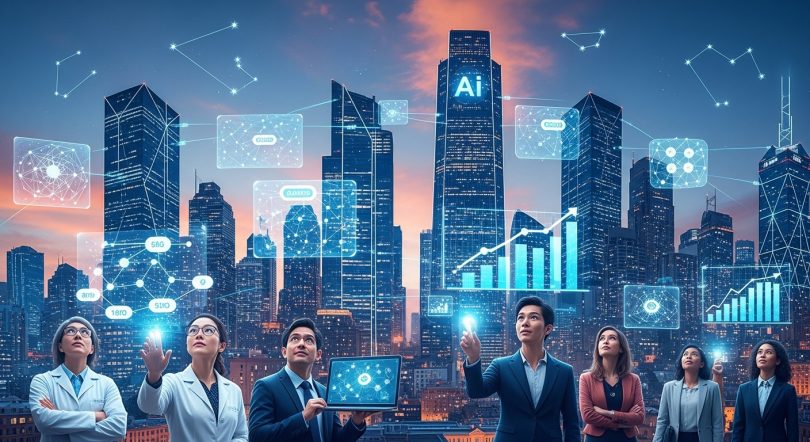

The future of artificial intelligence is entering a powerful new phase where systems are becoming more intelligent, autonomous, and deeply integrated into everyday life. Recent innovations in generative AI, agentic systems, robotics, and multimodal models are transforming industries and creating new possibilities for automation, creativity, and decision-making. AI is no longer just a tool—it is becoming a digital partner in business, science, and society.
Generative AI Breakthroughs
AI Content Creation Expansion
Generative AI is rapidly advancing in creating text, images, videos, and software code with high accuracy and creativity. Businesses are using these tools to automate marketing, design, and communication tasks. This reduces workload, increases productivity, and allows faster content production across digital industries.
Multimodal AI Systems
Multimodal AI systems can process and understand text, images, audio, and video simultaneously. This innovation improves human-computer interaction and enables more advanced applications like virtual assistants, smart analytics, and immersive digital experiences. It is becoming a key trend in AI development.
AI Video Generation Growth
AI-powered video generation tools are improving rapidly, allowing users to create realistic videos from simple text prompts. This innovation is transforming entertainment, education, and advertising industries by reducing production time and costs while increasing creative possibilities.
Personalized AI Models
Personalized AI models are designed to adapt to individual user preferences and behaviors. These systems improve recommendations in shopping, entertainment, and digital services. They enhance user experience by delivering highly customized and relevant results in real time.
Enterprise AI Adoption
Businesses are increasingly adopting generative AI for operations, customer service, and decision-making. This shift is improving efficiency, reducing costs, and increasing competitiveness. Companies are integrating AI into core workflows to stay ahead in the digital economy.
Agentic AI and Automation Future
Autonomous AI Agents
Autonomous AI agents can perform complex tasks without constant human supervision. They manage workflows, schedule tasks, and execute decisions independently. This innovation is transforming business operations by improving efficiency and reducing manual effort.
Workflow Automation Systems
AI-driven workflow systems automate repetitive business processes such as data entry, reporting, and customer support. These systems help organizations save time, reduce errors, and improve productivity across departments.
AI Decision Making Tools
AI decision-making tools analyze large datasets to provide insights and recommendations. These systems support businesses in making faster and more accurate decisions, improving strategic planning and operational efficiency.
Smart Digital Assistants
Smart digital assistants are evolving into more intelligent systems capable of handling complex queries and tasks. They assist users in managing schedules, emails, and business operations, making daily work more efficient.
AI Collaboration Platforms
AI collaboration platforms enable humans and machines to work together seamlessly. These systems improve teamwork by providing real-time insights, automation support, and enhanced communication tools in workplaces.
Robotics and Physical AI Development
Intelligent Robotics Systems
Intelligent robots are becoming more advanced, capable of performing complex tasks in manufacturing, healthcare, and logistics. They combine AI and sensors to operate efficiently in real-world environments.
Autonomous Vehicles Growth
Self-driving vehicles are one of the most significant AI innovations. These systems use AI, sensors, and real-time data to navigate roads safely, improving transportation efficiency and reducing human error.
AI in Manufacturing
AI-powered robotics in manufacturing improve production speed, accuracy, and efficiency. Smart factories use automation to reduce costs and increase output while maintaining high-quality standards.
Human Robot Interaction
Human-robot interaction is improving as robots become more responsive and adaptive. These systems are designed to assist humans in workplaces, hospitals, and homes, enhancing productivity and safety.
Physical AI Systems
Physical AI enables machines to interact with the real world through sensing, learning, and adapting. This technology is driving innovation in robotics, smart cities, and industrial automation.
AI in Science and Research
AI Scientific Discovery
AI is accelerating scientific research by analyzing complex data and generating new hypotheses. It is helping researchers make faster discoveries in medicine, physics, and chemistry.
Drug Development Acceleration
AI is speeding up drug discovery by predicting molecular behavior and testing compounds virtually. This reduces time and cost in developing new medicines and treatments.
Climate Modeling AI
AI systems are improving climate predictions by analyzing environmental data. This helps scientists understand weather patterns and develop better strategies for climate change management.
AI Laboratory Assistants
AI-powered lab assistants are supporting researchers by automating experiments and analyzing results. This improves accuracy and allows scientists to focus on innovation.
Data-Driven Research Systems
AI enhances research by processing large datasets and identifying patterns that humans may miss. This leads to more accurate conclusions and faster scientific progress.
AI Ethics and Security Evolution
Responsible AI Development
Responsible AI ensures systems are built with fairness, transparency, and accountability. It prevents bias and ensures ethical use of artificial intelligence in society.
AI Security Systems
AI security systems protect against cyber threats by detecting unusual activity and preventing attacks. These systems are essential for safeguarding digital infrastructure.
Data Privacy Protection
AI-driven privacy tools protect sensitive information by encrypting data and controlling access. This ensures user trust and compliance with global regulations.
Bias Reduction Techniques
AI systems are being improved to reduce bias in decision-making. Developers are working to ensure fair outcomes in areas like hiring, finance, and healthcare.
Regulatory AI Frameworks
Governments are creating rules to regulate AI usage and ensure safe deployment. These frameworks guide ethical development and responsible innovation.
AI in Business Transformation
Smart Business Automation
AI automates business operations such as customer service, logistics, and marketing. This improves efficiency and reduces operational costs significantly.
Predictive Analytics Growth
Predictive analytics uses AI to forecast trends and customer behavior. Businesses use it to make smarter decisions and improve profitability.
AI Customer Experience
AI enhances customer experience through chatbots, personalized recommendations, and faster support systems. This increases satisfaction and loyalty.
Digital Workforce Integration
AI is creating digital workers that assist human employees in completing tasks. This improves productivity and streamlines business processes.
AI-Driven Marketing
AI-driven marketing analyzes consumer behavior to create targeted campaigns. This improves engagement and increases conversion rates.
Future AI Ecosystem Development
Smart City Integration
AI is powering smart cities by improving traffic management, energy usage, and public services. This creates more efficient urban environments.
Edge AI Computing
Edge AI processes data closer to devices, reducing latency and improving real-time performance. It is essential for IoT and smart systems.
Cloud AI Expansion
Cloud-based AI platforms allow businesses to scale operations and access advanced tools without heavy infrastructure costs.
AI and 5G Connectivity
The combination of AI and 5G enables faster communication, smarter devices, and real-time data processing across networks.
Future Intelligent Systems
Future AI systems will be fully integrated into daily life, powering everything from homes to industries with intelligent automation.
FAQs
What is the biggest AI innovation today?
Agentic AI and generative AI systems are among the biggest innovations today.
How is AI changing businesses?
AI improves automation, decision-making, and customer experience in businesses.
What is agentic AI?
Agentic AI refers to systems that can perform tasks independently without constant human input.
Is AI safe for the future?
AI is safe when developed with proper ethics, security, and regulations.
What industries benefit most from AI?
Healthcare, finance, manufacturing, and technology benefit the most from AI.
Conclusion
Artificial intelligence is rapidly evolving into a powerful force that is reshaping industries, economies, and daily life. From generative AI to autonomous systems and smart ecosystems, innovation is accelerating at an unprecedented pace. As AI becomes more intelligent and integrated, it will drive future growth, enhance productivity, and redefine how humans interact with technology in the digital era.