
The world is experiencing one of the fastest technological transformations in human history. What once took decades to evolve is now changing within months. From artificial intelligence reshaping decision-making processes to quantum computing challenging the limits of classical computation, industries across the globe are being redefined at their core.
These revolutionary technology trends are not isolated innovations; they are interconnected forces reshaping how businesses operate, how governments function, and how individuals live and work. The impact spans healthcare, finance, manufacturing, education, agriculture, transportation, and nearly every other sector.
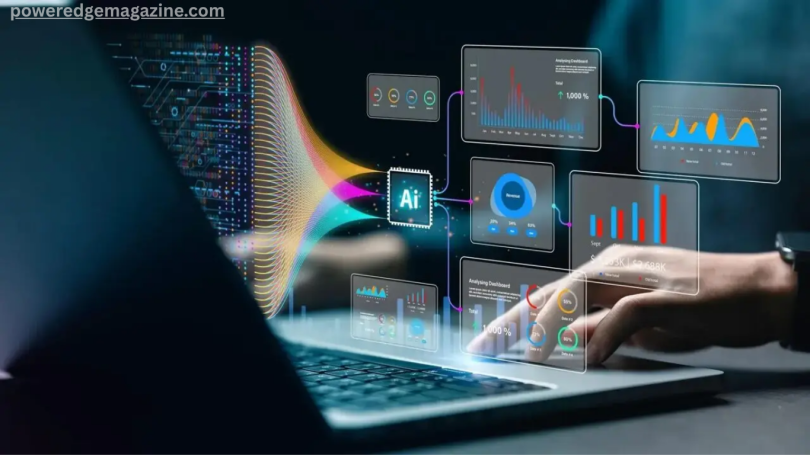
Machine learning, a subset of AI, enables systems to learn from data, identify patterns, and make decisions with minimal human intervention. This article explores the most important technological trends transforming industries worldwide, their real-world applications, benefits, challenges, and the future they are building.
More Read: The Future of Consumer Technology and Digital Connectivity
Artificial Intelligence (AI) and Machine Learning (ML)
Artificial Intelligence has moved from a futuristic concept to a present-day necessity.
Industry Impact
- Healthcare: AI is used for diagnosing diseases, predicting patient outcomes, and assisting in robotic surgeries. Algorithms can now detect cancers in imaging scans with accuracy comparable to or better than human doctors.
- Finance: Banks use AI for fraud detection, credit scoring, algorithmic trading, and customer service chatbots.
- Retail: Recommendation engines powered by AI drive personalized shopping experiences, increasing sales and customer engagement.
- Manufacturing: Predictive maintenance systems analyze equipment data to prevent breakdowns before they occur.
Key Benefits
- Improved efficiency and automation
- Data-driven decision-making
- Cost reduction
- Enhanced customer experience
Challenges
- Ethical concerns and bias in algorithms
- Job displacement fears
- Data privacy issues
AI continues to evolve rapidly, with generative AI systems now capable of creating text, images, music, and even software code, revolutionizing creative and technical industries alike.
Internet of Things (IoT)
The Internet of Things refers to the network of physical devices embedded with sensors, software, and connectivity that allows them to exchange data.
Industry Impact
- Smart Homes: IoT devices like thermostats, lights, and security systems improve convenience and energy efficiency.
- Healthcare: Wearable devices monitor heart rate, sleep patterns, and physical activity in real time.
- Agriculture: Smart farming systems monitor soil moisture, weather conditions, and crop health to optimize yield.
- Logistics: IoT tracking systems improve supply chain visibility and reduce delays.
Key Benefits
- Real-time data collection
- Operational efficiency
- Improved safety and monitoring
Challenges
- Cybersecurity vulnerabilities
- High implementation costs
- Data overload and management complexity
As 5G networks expand, IoT adoption is expected to grow exponentially, enabling faster and more reliable device communication.
Blockchain Technology
Blockchain is a decentralized digital ledger that records transactions across multiple computers in a secure, transparent, and tamper-proof way.
Industry Impact
- Finance: Cryptocurrencies like Bitcoin and Ethereum are built on blockchain technology, enabling decentralized financial systems.
- Supply Chain: Blockchain improves transparency by tracking goods from origin to destination.
- Healthcare: Patient records can be securely stored and shared across institutions.
- Government: Blockchain can be used for secure voting systems and identity verification.
Key Benefits
- Enhanced security and transparency
- Reduced fraud
- Elimination of intermediaries
Challenges
- Scalability issues
- Regulatory uncertainty
- High energy consumption (for some blockchain models)
Despite challenges, blockchain is becoming a foundational technology for trust-based digital systems.
Cloud Computing and Edge Computing
Cloud computing provides on-demand access to computing resources over the internet, while edge computing processes data closer to where it is generated.
Industry Impact
- Business Operations: Companies use cloud platforms for data storage, application hosting, and collaboration tools.
- Streaming Services: Platforms like video and music streaming rely heavily on cloud infrastructure.
- Autonomous Vehicles: Edge computing enables real-time decision-making without relying on distant servers.
- Healthcare: Cloud systems store electronic health records accessible from anywhere.
Key Benefits
- Scalability and flexibility
- Cost efficiency
- Faster innovation cycles
Challenges
- Data security concerns
- Downtime risks
- Dependency on service providers
The combination of cloud and edge computing is creating hybrid systems that balance speed, efficiency, and scalability.
5G and Next-Generation Connectivity
5G technology is revolutionizing communication by offering ultra-fast speeds, low latency, and massive device connectivity.
Industry Impact
- Telemedicine: High-speed connectivity enables real-time remote surgeries and consultations.
- Smart Cities: Traffic management, surveillance, and infrastructure systems become more efficient.
- Entertainment: Augmented and virtual reality experiences become smoother and more immersive.
- Manufacturing: Real-time machine communication improves automation and robotics.
Key Benefits
- Extremely fast data transfer
- Reduced latency
- Massive connectivity support
Challenges
- Infrastructure costs
- Security concerns
- Uneven global deployment
5G is laying the foundation for future innovations such as autonomous transportation and fully connected smart ecosystems.
Robotics and Automation
Robotics and automation technologies are transforming industries by replacing repetitive human tasks with intelligent machines.
Industry Impact
- Manufacturing: Industrial robots assemble products with precision and speed.
- Healthcare: Surgical robots assist doctors in complex procedures.
- Retail and Warehousing: Automated systems manage inventory and fulfillment centers.
- Agriculture: Robots are used for planting, harvesting, and monitoring crops.
Key Benefits
- Increased productivity
- Reduced human error
- Lower operational costs
Challenges
- Workforce displacement
- High setup costs
- Maintenance complexity
As AI integration improves, robots are becoming more adaptive and capable of performing complex tasks in dynamic environments.
Quantum Computing
Quantum computing uses principles of quantum mechanics to process information in fundamentally different ways compared to classical computers.
Industry Impact
- Pharmaceuticals: Accelerates drug discovery by simulating molecular interactions.
- Finance: Optimizes portfolio management and risk analysis.
- Cybersecurity: Challenges current encryption methods while enabling new forms of secure communication.
- Science and Engineering: Solves complex simulations in physics and material science.
Key Benefits
- Unprecedented computational power
- Ability to solve complex problems
- Advances in scientific research
Challenges
- Extremely expensive technology
- Early-stage development
- Stability and error correction issues
Although still emerging, quantum computing is expected to redefine problem-solving in the next few decades.
Augmented Reality (AR) and Virtual Reality (VR)
AR and VR technologies are changing how humans interact with digital environments.
Industry Impact
- Education: Immersive learning experiences improve engagement and understanding.
- Healthcare: VR is used for medical training and therapy.
- Retail: AR allows customers to virtually try products before buying.
- Real Estate: Virtual tours enable remote property viewing.
Key Benefits
- Immersive user experiences
- Better training and simulation
- Enhanced customer engagement
Challenges
- High hardware costs
- Limited content availability
- Motion sickness issues in VR
As devices become more affordable, AR and VR are expected to become mainstream technologies.
Renewable Energy Technologies and Smart Grids
Technology is also revolutionizing the energy sector, particularly through renewable energy and intelligent distribution systems.
Industry Impact
- Solar and Wind Energy: Advanced systems improve energy capture and efficiency.
- Smart Grids: AI-driven grids optimize electricity distribution and reduce waste.
- Electric Vehicles: Battery technologies are improving rapidly, increasing EV adoption.
Key Benefits
- Reduced carbon emissions
- Sustainable energy production
- Improved energy efficiency
Challenges
- High infrastructure costs
- Energy storage limitations
- Dependence on weather conditions
The global shift toward sustainability is accelerating innovation in this sector.
Cybersecurity Advancements
As digital transformation expands, cybersecurity becomes more critical than ever.
Industry Impact
- Businesses: Protect sensitive data and prevent cyberattacks.
- Government: Secure national infrastructure and citizen data.
- Individuals: Safeguard personal identities and online activity.
Key Technologies
- AI-powered threat detection
- Zero-trust security models
- Biometric authentication
Key Benefits
- Stronger protection against attacks
- Faster threat response
- Improved trust in digital systems
Challenges
- Increasing sophistication of cyberattacks
- Skill shortages in cybersecurity workforce
- Constantly evolving threats
Cybersecurity is no longer optional—it is a foundational requirement for all digital systems.
Future Outlook: A Fully Integrated Technological Ecosystem
The most important trend is not any single technology but the convergence of all these innovations. AI combined with IoT creates smart environments. Blockchain integrated with cloud computing enhances trust and scalability. 5G enables real-time global connectivity, while quantum computing promises breakthroughs in complex problem-solving.
Industries are moving toward fully automated, data-driven, and intelligent ecosystems. Businesses that adapt quickly will thrive, while those that resist change risk becoming obsolete.
Frequently Asked Question
What is the most important technology trend today?
Artificial Intelligence is currently the most impactful technology due to its widespread applications across industries.
How does IoT affect daily life?
IoT improves daily life through smart homes, wearable health devices, and connected appliances that enhance convenience and efficiency.
Is blockchain only used for cryptocurrency?
No, blockchain is also used in supply chains, healthcare records, voting systems, and identity management.
Will automation replace human jobs?
Automation may replace certain repetitive jobs, but it will also create new roles requiring advanced technical and analytical skills.
What is the difference between cloud and edge computing?
Cloud computing processes data in centralized servers, while edge computing processes data closer to the source for faster response times.
How will quantum computing impact the future?
Quantum computing will solve complex problems in science, medicine, and finance that are currently impossible for classical computers.
Are AR and VR only for gaming?
No, AR and VR are widely used in education, healthcare, training, real estate, and retail beyond gaming.
Conclusion
Revolutionary technology trends are reshaping the global industrial landscape at an unprecedented pace. From artificial intelligence and blockchain to quantum computing and renewable energy systems, these innovations are not just improving existing processes—they are redefining what is possible. The future belongs to organizations and societies that embrace change, invest in innovation, and adapt to rapidly evolving digital ecosystems. While challenges such as ethics, security, and inequality remain, the potential benefits far outweigh the risks.