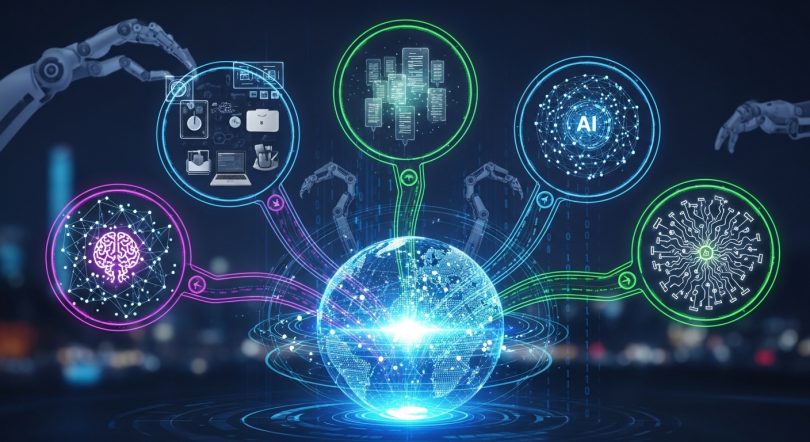

Modern technology is evolving faster than ever, reshaping industries, communication, business models, and everyday life. From artificial intelligence to immersive digital experiences, new innovations are driving global transformation. These trends are not only improving efficiency but also creating new opportunities for growth, creativity, and connectivity in an increasingly digital and data-driven world.
Artificial Intelligence Revolution
Generative AI Expansion
Generative AI is transforming content creation, design, and problem-solving by producing text, images, and code automatically. Businesses use it to improve productivity and creativity. It is reshaping industries like marketing, software development, and entertainment by enabling faster and smarter content generation.
AI in Decision Making
AI-driven decision-making systems analyze large datasets to provide accurate insights and predictions. Companies use this technology to improve business strategies, reduce risks, and optimize operations. It enhances efficiency and helps organizations make data-backed decisions in real time.
Intelligent Automation Systems
Intelligent automation combines AI with robotic process automation to handle repetitive tasks. It improves accuracy, reduces costs, and increases productivity across industries such as finance, healthcare, and manufacturing. This trend is replacing manual workflows with smart automated solutions.
AI Personal Assistants
AI personal assistants like voice and chat-based systems help users manage tasks, schedules, and information. They improve convenience and user experience by providing quick responses and personalized support in daily digital interactions.
Ethical AI Development
Ethical AI focuses on building transparent, fair, and responsible artificial intelligence systems. It addresses concerns like bias, privacy, and accountability. This ensures AI technologies are used safely and benefit society as a whole.
Cloud and Edge Computing
Hybrid Cloud Systems
Hybrid cloud systems combine private and public cloud environments for flexibility and control. Businesses use them to manage sensitive data securely while benefiting from scalable cloud resources for performance and efficiency.
Multi Cloud Adoption
Multi cloud strategies involve using multiple cloud providers to reduce dependency and improve reliability. This approach enhances performance, increases flexibility, and helps businesses avoid downtime risks.
Edge Data Processing
Edge computing processes data closer to its source, reducing latency and improving real-time performance. It is essential for IoT devices, autonomous systems, and smart applications that require instant responses.
Serverless Architecture Growth
Serverless computing allows developers to build applications without managing infrastructure. It reduces operational complexity and enables faster development, deployment, and scaling of digital services.
Cloud Native Applications
Cloud native applications are designed specifically for cloud environments. They offer high scalability, resilience, and flexibility, making them ideal for modern digital businesses.
Internet of Things Expansion
Smart Device Connectivity
Smart devices connect to the internet to share data and automate tasks. They improve convenience, efficiency, and real-time monitoring in homes, industries, and cities.
Industrial IoT Growth
Industrial IoT connects machines and systems in factories to improve productivity and reduce downtime. It enables predictive maintenance and smarter manufacturing processes.
Smart Home Technology
Smart home technology allows users to control lighting, security, and appliances remotely. It enhances comfort, energy efficiency, and safety in modern households.
IoT Security Solutions
IoT security solutions protect connected devices from cyber threats. They ensure safe communication and prevent unauthorized access in large-scale networks.
Real Time Monitoring Systems
Real time monitoring systems collect and analyze live data from devices. They help businesses make quick decisions and improve operational efficiency.
Digital Economy Transformation
E Commerce Growth
E-commerce is expanding rapidly as consumers shift to online shopping. It provides convenience, global reach, and personalized shopping experiences for users and businesses.
Fintech Innovation Rise
Fintech innovations are revolutionizing banking and financial services through digital payments, mobile banking, and online lending platforms. They improve accessibility and efficiency.
Digital Payment Systems
Digital payment systems enable fast and secure transactions using mobile wallets and online platforms. They reduce reliance on cash and improve financial convenience.
Remote Work Technology
Remote work technology allows employees to work from anywhere using digital tools. It increases flexibility, productivity, and global collaboration in modern workplaces.
Gig Economy Expansion
The gig economy is growing through freelance and short-term digital work opportunities. It provides flexible income sources and supports independent work lifestyles.
Cybersecurity Evolution
Advanced Threat Detection
Advanced threat detection systems identify cyber risks using AI and behavioral analysis. They help prevent attacks before they cause damage.
Zero Trust Security Model
Zero trust security assumes no user or system is automatically trusted. It requires continuous verification, improving protection against cyber threats.
Data Encryption Advances
Data encryption protects sensitive information by converting it into secure formats. It ensures privacy during storage and communication.
Identity Protection Systems
Identity protection systems secure user accounts using multi-factor authentication and biometric verification. They prevent unauthorized access to digital systems.
Cyber Defense Automation
Cyber defense automation uses AI to respond to threats instantly. It reduces response time and strengthens overall cybersecurity systems.
Immersive Technologies Rise
Virtual Reality Growth
Virtual reality creates immersive digital environments for gaming, training, and education. It enhances user experience through interactive simulations.
Augmented Reality Applications
Augmented reality overlays digital content onto the real world. It is widely used in retail, education, and navigation systems.
Mixed Reality Systems
Mixed reality combines physical and digital environments for advanced interaction. It improves collaboration and visualization in professional fields.
Metaverse Development
The metaverse is a virtual digital world where users interact, work, and play. It represents the future of online social and business interaction.
3D Digital Experiences
3D technologies enhance visualization in gaming, design, and engineering. They improve realism and user engagement in digital environments.
Sustainable Technology Trends
Green Computing Solutions
Green computing focuses on reducing energy consumption in technology systems. It promotes eco-friendly hardware and efficient software usage.
Renewable Energy Tech
Renewable energy technologies like solar and wind power support sustainable development. They reduce environmental impact and dependence on fossil fuels.
Smart Energy Systems
Smart energy systems optimize electricity usage using digital monitoring and automation. They improve efficiency and reduce waste.
Carbon Reduction Technology
Carbon reduction technologies help industries minimize emissions through cleaner processes and innovations. They support global climate goals.
Sustainable Data Centers
Sustainable data centers use energy-efficient systems and renewable energy sources. They reduce environmental impact while supporting digital infrastructure.
FAQs
What are the latest technology trends?
They include AI, cloud computing, IoT, cybersecurity, and immersive technologies.
Why is AI important in modern technology?
AI improves automation, decision-making, and efficiency across industries.
What is cloud computing used for?
It is used for storing data and running applications over the internet.
How does IoT work?
IoT connects devices to share data and enable automation.
What is the future of digital technology?
It will focus on AI, automation, sustainability, and immersive experiences.
Conclusion
Latest technology trends are shaping a highly connected, intelligent, and automated digital world. Innovations in AI, cloud computing, IoT, cybersecurity, and immersive technologies are transforming industries and lifestyles. As digital transformation continues to accelerate, these advancements will create smarter systems, new opportunities, and a more efficient global future driven by technology and innovation.